Compare commits

@@ -32,6 +32,9 @@ build:macos --copt=-w
|
||||
# Sets the default Apple platform to macOS.
|
||||
build --apple_platform_type=macos
|
||||
|
||||
# Compile ObjC++ files with C++17
|
||||
build --per_file_copt=.*\.mm\$@-std=c++17
|
||||
|
||||
# Allow debugging with XCODE
|
||||
build --apple_generate_dsym
|
||||
|
||||
@@ -58,6 +61,7 @@ build:android_arm64 --fat_apk_cpu=arm64-v8a
|
||||
|
||||
# iOS configs.
|
||||
build:ios --apple_platform_type=ios
|
||||
build:ios --copt=-fno-aligned-allocation
|
||||
|
||||
build:ios_i386 --config=ios
|
||||
build:ios_i386 --cpu=ios_i386
|
||||
@@ -87,6 +91,10 @@ build:darwin_x86_64 --apple_platform_type=macos
|
||||
build:darwin_x86_64 --macos_minimum_os=10.12
|
||||
build:darwin_x86_64 --cpu=darwin_x86_64
|
||||
|
||||
build:darwin_arm64 --apple_platform_type=macos
|
||||
build:darwin_arm64 --macos_minimum_os=10.16
|
||||
build:darwin_arm64 --cpu=darwin_arm64
|
||||
|
||||
# This bazelrc file is meant to be written by a setup script.
|
||||
try-import %workspace%/.configure.bazelrc
|
||||
|
||||
|
||||
@@ -1 +1 @@
|
||||
3.7.2
|
||||
5.2.0
|
||||
|
||||
@@ -0,0 +1,27 @@
|
||||
---
|
||||
name: "Build/Installation Issue"
|
||||
about: Use this template for build/installation issues
|
||||
labels: type:build/install
|
||||
|
||||
---
|
||||
<em>Please make sure that this is a build/installation issue and also refer to the [troubleshooting](https://google.github.io/mediapipe/getting_started/troubleshooting.html) documentation before raising any issues.</em>
|
||||
|
||||
**System information** (Please provide as much relevant information as possible)
|
||||
- OS Platform and Distribution (e.g. Linux Ubuntu 16.04, Android 11, iOS 14.4):
|
||||
- Compiler version (e.g. gcc/g++ 8 /Apple clang version 12.0.0):
|
||||
- Programming Language and version ( e.g. C++ 14, Python 3.6, Java ):
|
||||
- Installed using virtualenv? pip? Conda? (if python):
|
||||
- [MediaPipe version](https://github.com/google/mediapipe/releases):
|
||||
- Bazel version:
|
||||
- XCode and Tulsi versions (if iOS):
|
||||
- Android SDK and NDK versions (if android):
|
||||
- Android [AAR](https://google.github.io/mediapipe/getting_started/android_archive_library.html) ( if android):
|
||||
- OpenCV version (if running on desktop):
|
||||
|
||||
**Describe the problem**:
|
||||
|
||||
|
||||
**[Provide the exact sequence of commands / steps that you executed before running into the problem](https://google.github.io/mediapipe/getting_started/getting_started.html):**
|
||||
|
||||
**Complete Logs:**
|
||||
Include Complete Log information or source code that would be helpful to diagnose the problem. If including tracebacks, please include the full traceback. Large logs and files should be attached:
|
||||
@@ -0,0 +1,26 @@
|
||||
---
|
||||
name: "Solution Issue"
|
||||
about: Use this template for assistance with a specific mediapipe solution, such as "Pose" or "Iris", including inference model usage/training, solution-specific calculators, etc.
|
||||
labels: type:support
|
||||
|
||||
---
|
||||
<em>Please make sure that this is a [solution](https://google.github.io/mediapipe/solutions/solutions.html) issue.<em>
|
||||
|
||||
**System information** (Please provide as much relevant information as possible)
|
||||
- Have I written custom code (as opposed to using a stock example script provided in Mediapipe):
|
||||
- OS Platform and Distribution (e.g., Linux Ubuntu 16.04, Android 11, iOS 14.4):
|
||||
- [MediaPipe version](https://github.com/google/mediapipe/releases):
|
||||
- Bazel version:
|
||||
- Solution (e.g. FaceMesh, Pose, Holistic):
|
||||
- Programming Language and version ( e.g. C++, Python, Java):
|
||||
|
||||
**Describe the expected behavior:**
|
||||
|
||||
**Standalone code you may have used to try to get what you need :**
|
||||
|
||||
If there is a problem, provide a reproducible test case that is the bare minimum necessary to generate the problem. If possible, please share a link to Colab/repo link /any notebook:
|
||||
|
||||
**Other info / Complete Logs :**
|
||||
Include any logs or source code that would be helpful to
|
||||
diagnose the problem. If including tracebacks, please include the full
|
||||
traceback. Large logs and files should be attached:
|
||||
@@ -0,0 +1,51 @@
|
||||
---
|
||||
name: "Documentation Issue"
|
||||
about: Use this template for documentation related issues
|
||||
labels: type:docs
|
||||
|
||||
---
|
||||
Thank you for submitting a MediaPipe documentation issue.
|
||||
The MediaPipe docs are open source! To get involved, read the documentation Contributor Guide
|
||||
## URL(s) with the issue:
|
||||
|
||||
Please provide a link to the documentation entry, for example: https://github.com/google/mediapipe/blob/master/docs/solutions/face_mesh.md#models
|
||||
|
||||
## Description of issue (what needs changing):
|
||||
|
||||
Kinds of documentation problems:
|
||||
|
||||
### Clear description
|
||||
|
||||
For example, why should someone use this method? How is it useful?
|
||||
|
||||
### Correct links
|
||||
|
||||
Is the link to the source code correct?
|
||||
|
||||
### Parameters defined
|
||||
Are all parameters defined and formatted correctly?
|
||||
|
||||
### Returns defined
|
||||
|
||||
Are return values defined?
|
||||
|
||||
### Raises listed and defined
|
||||
|
||||
Are the errors defined? For example,
|
||||
|
||||
### Usage example
|
||||
|
||||
Is there a usage example?
|
||||
|
||||
See the API guide:
|
||||
on how to write testable usage examples.
|
||||
|
||||
### Request visuals, if applicable
|
||||
|
||||
Are there currently visuals? If not, will it clarify the content?
|
||||
|
||||
### Submit a pull request?
|
||||
|
||||
Are you planning to also submit a pull request to fix the issue? See the docs
|
||||
https://github.com/google/mediapipe/blob/master/CONTRIBUTING.md
|
||||
|
||||
@@ -0,0 +1,32 @@
|
||||
---
|
||||
name: "Bug Issue"
|
||||
about: Use this template for reporting a bug
|
||||
labels: type:bug
|
||||
|
||||
---
|
||||
<em>Please make sure that this is a bug and also refer to the [troubleshooting](https://google.github.io/mediapipe/getting_started/troubleshooting.html), FAQ documentation before raising any issues.</em>
|
||||
|
||||
**System information** (Please provide as much relevant information as possible)
|
||||
|
||||
- Have I written custom code (as opposed to using a stock example script provided in MediaPipe):
|
||||
- OS Platform and Distribution (e.g., Linux Ubuntu 16.04, Android 11, iOS 14.4):
|
||||
- Mobile device (e.g. iPhone 8, Pixel 2, Samsung Galaxy) if the issue happens on mobile device:
|
||||
- Browser and version (e.g. Google Chrome, Safari) if the issue happens on browser:
|
||||
- Programming Language and version ( e.g. C++, Python, Java):
|
||||
- [MediaPipe version](https://github.com/google/mediapipe/releases):
|
||||
- Bazel version (if compiling from source):
|
||||
- Solution ( e.g. FaceMesh, Pose, Holistic ):
|
||||
- Android Studio, NDK, SDK versions (if issue is related to building in Android environment):
|
||||
- Xcode & Tulsi version (if issue is related to building for iOS):
|
||||
|
||||
**Describe the current behavior:**
|
||||
|
||||
**Describe the expected behavior:**
|
||||
|
||||
**Standalone code to reproduce the issue:**
|
||||
Provide a reproducible test case that is the bare minimum necessary to replicate the problem. If possible, please share a link to Colab/repo link /any notebook:
|
||||
|
||||
**Other info / Complete Logs :**
|
||||
Include any logs or source code that would be helpful to
|
||||
diagnose the problem. If including tracebacks, please include the full
|
||||
traceback. Large logs and files should be attached
|
||||
@@ -0,0 +1,24 @@
|
||||
---
|
||||
name: "Feature Request"
|
||||
about: Use this template for raising a feature request
|
||||
labels: type:feature
|
||||
|
||||
---
|
||||
<em>Please make sure that this is a feature request.</em>
|
||||
|
||||
**System information** (Please provide as much relevant information as possible)
|
||||
|
||||
- MediaPipe Solution (you are using):
|
||||
- Programming language : C++/typescript/Python/Objective C/Android Java
|
||||
- Are you willing to contribute it (Yes/No):
|
||||
|
||||
|
||||
**Describe the feature and the current behavior/state:**
|
||||
|
||||
**Will this change the current api? How?**
|
||||
|
||||
**Who will benefit with this feature?**
|
||||
|
||||
**Please specify the use cases for this feature:**
|
||||
|
||||
**Any Other info:**
|
||||
@@ -0,0 +1,12 @@
|
||||
---
|
||||
name: "Other Issue"
|
||||
about: Use this template for any other non-support related issues.
|
||||
labels: type:others
|
||||
|
||||
---
|
||||
This template is for miscellaneous issues not covered by the other issue categories
|
||||
|
||||
For questions on how to work with MediaPipe, or support for problems that are not verified bugs in MediaPipe, please go to [StackOverflow](https://stackoverflow.com/questions/tagged/mediapipe) and [Slack](https://mediapipe.page.link/joinslack) communities.
|
||||
|
||||
If you are reporting a vulnerability, please use the [dedicated reporting process](https://github.com/google/mediapipe/security).
|
||||
|
||||
@@ -0,0 +1,18 @@
|
||||
# Copyright 2021 The MediaPipe Authors.
|
||||
#
|
||||
# Licensed under the Apache License, Version 2.0 (the "License");
|
||||
# you may not use this file except in compliance with the License.
|
||||
# You may obtain a copy of the License at
|
||||
#
|
||||
# http://www.apache.org/licenses/LICENSE-2.0
|
||||
#
|
||||
# Unless required by applicable law or agreed to in writing, software
|
||||
# distributed under the License is distributed on an "AS IS" BASIS,
|
||||
# WITHOUT WARRANTIES OR CONDITIONS OF ANY KIND, either express or implied.
|
||||
# See the License for the specific language governing permissions and
|
||||
# limitations under the License.
|
||||
# ============================================================================
|
||||
|
||||
# A list of assignees
|
||||
assignees:
|
||||
- sureshdagooglecom
|
||||
@@ -0,0 +1,34 @@
|
||||
# Copyright 2021 The MediaPipe Authors.
|
||||
#
|
||||
# Licensed under the Apache License, Version 2.0 (the "License");
|
||||
# you may not use this file except in compliance with the License.
|
||||
# You may obtain a copy of the License at
|
||||
#
|
||||
# http://www.apache.org/licenses/LICENSE-2.0
|
||||
#
|
||||
# Unless required by applicable law or agreed to in writing, software
|
||||
# distributed under the License is distributed on an "AS IS" BASIS,
|
||||
# WITHOUT WARRANTIES OR CONDITIONS OF ANY KIND, either express or implied.
|
||||
# See the License for the specific language governing permissions and
|
||||
# limitations under the License.
|
||||
# ============================================================================
|
||||
#
|
||||
# This file was assembled from multiple pieces, whose use is documented
|
||||
# throughout. Please refer to the TensorFlow dockerfiles documentation
|
||||
# for more information.
|
||||
|
||||
# Number of days of inactivity before an Issue or Pull Request becomes stale
|
||||
daysUntilStale: 7
|
||||
# Number of days of inactivity before a stale Issue or Pull Request is closed
|
||||
daysUntilClose: 7
|
||||
# Only issues or pull requests with all of these labels are checked if stale. Defaults to `[]` (disabled)
|
||||
onlyLabels:
|
||||
- stat:awaiting response
|
||||
# Comment to post when marking as stale. Set to `false` to disable
|
||||
markComment: >
|
||||
This issue has been automatically marked as stale because it has not had
|
||||
recent activity. It will be closed if no further activity occurs. Thank you.
|
||||
# Comment to post when removing the stale label. Set to `false` to disable
|
||||
unmarkComment: false
|
||||
closeComment: >
|
||||
Closing as stale. Please reopen if you'd like to work on this further.
|
||||
@@ -5,7 +5,7 @@
|
||||
* Bug fixes
|
||||
* Documentation fixes
|
||||
|
||||
For new feature additions (e.g., new graphs and calculators), we are currently not planning to accept new feature pull requests into the MediaPipe repository. Instead, we like to get contributors to create their own repositories of the new feature and list it at [Awesome MediaPipe](https://mediapipe.org). This will allow contributors to more quickly get their code out to the community.
|
||||
For new feature additions (e.g., new graphs and calculators), we are currently not planning to accept new feature pull requests into the MediaPipe repository. Instead, we like to get contributors to create their own repositories of the new feature and list it at [Awesome MediaPipe](https://mediapipe.page.link/awesome-mediapipe). This will allow contributors to more quickly get their code out to the community.
|
||||
|
||||
Before sending your pull requests, make sure you followed this list.
|
||||
|
||||
|
||||
@@ -12,7 +12,7 @@
|
||||
# See the License for the specific language governing permissions and
|
||||
# limitations under the License.
|
||||
|
||||
FROM ubuntu:18.04
|
||||
FROM ubuntu:20.04
|
||||
|
||||
MAINTAINER <[email protected]>
|
||||
|
||||
@@ -23,6 +23,7 @@ ENV DEBIAN_FRONTEND=noninteractive
|
||||
|
||||
RUN apt-get update && apt-get install -y --no-install-recommends \
|
||||
build-essential \
|
||||
gcc-8 g++-8 \
|
||||
ca-certificates \
|
||||
curl \
|
||||
ffmpeg \
|
||||
@@ -41,20 +42,24 @@ RUN apt-get update && apt-get install -y --no-install-recommends \
|
||||
software-properties-common && \
|
||||
add-apt-repository -y ppa:openjdk-r/ppa && \
|
||||
apt-get update && apt-get install -y openjdk-8-jdk && \
|
||||
apt-get install -y mesa-common-dev libegl1-mesa-dev libgles2-mesa-dev && \
|
||||
apt-get install -y mesa-utils && \
|
||||
apt-get clean && \
|
||||
rm -rf /var/lib/apt/lists/*
|
||||
|
||||
RUN update-alternatives --install /usr/bin/gcc gcc /usr/bin/gcc-8 100 --slave /usr/bin/g++ g++ /usr/bin/g++-8
|
||||
RUN pip3 install --upgrade setuptools
|
||||
RUN pip3 install wheel
|
||||
RUN pip3 install future
|
||||
RUN pip3 install absl-py numpy opencv-contrib-python protobuf==3.20.1
|
||||
RUN pip3 install six==1.14.0
|
||||
RUN pip3 install tensorflow==1.14.0
|
||||
RUN pip3 install tensorflow==2.2.0
|
||||
RUN pip3 install tf_slim
|
||||
|
||||
RUN ln -s /usr/bin/python3 /usr/bin/python
|
||||
|
||||
# Install bazel
|
||||
ARG BAZEL_VERSION=3.7.2
|
||||
ARG BAZEL_VERSION=5.2.0
|
||||
RUN mkdir /bazel && \
|
||||
wget --no-check-certificate -O /bazel/installer.sh "https://github.com/bazelbuild/bazel/releases/download/${BAZEL_VERSION}/b\
|
||||
azel-${BAZEL_VERSION}-installer-linux-x86_64.sh" && \
|
||||
|
||||
@@ -7,10 +7,4 @@ include MANIFEST.in
|
||||
include README.md
|
||||
include requirements.txt
|
||||
|
||||
recursive-include mediapipe/modules *.tflite *.txt *.binarypb
|
||||
exclude mediapipe/modules/objectron/object_detection_3d_chair_1stage.tflite
|
||||
exclude mediapipe/modules/objectron/object_detection_3d_sneakers_1stage.tflite
|
||||
exclude mediapipe/modules/objectron/object_detection_3d_sneakers.tflite
|
||||
exclude mediapipe/modules/objectron/object_detection_3d_chair.tflite
|
||||
exclude mediapipe/modules/objectron/object_detection_3d_camera.tflite
|
||||
exclude mediapipe/modules/objectron/object_detection_3d_cup.tflite
|
||||
recursive-include mediapipe/modules *.txt
|
||||
|
||||
@@ -4,7 +4,7 @@ title: Home
|
||||
nav_order: 1
|
||||
---
|
||||
|
||||

|
||||

|
||||
|
||||
--------------------------------------------------------------------------------
|
||||
|
||||
@@ -13,21 +13,21 @@ nav_order: 1
|
||||
[MediaPipe](https://google.github.io/mediapipe/) offers cross-platform, customizable
|
||||
ML solutions for live and streaming media.
|
||||
|
||||
 | 
|
||||
 | 
|
||||
:------------------------------------------------------------------------------------------------------------: | :----------------------------------------------------:
|
||||
***End-to-End acceleration***: *Built-in fast ML inference and processing accelerated even on common hardware* | ***Build once, deploy anywhere***: *Unified solution works across Android, iOS, desktop/cloud, web and IoT*
|
||||
 | 
|
||||
 | 
|
||||
***Ready-to-use solutions***: *Cutting-edge ML solutions demonstrating full power of the framework* | ***Free and open source***: *Framework and solutions both under Apache 2.0, fully extensible and customizable*
|
||||
|
||||
## ML solutions in MediaPipe
|
||||
|
||||
Face Detection | Face Mesh | Iris | Hands | Pose | Holistic
|
||||
:----------------------------------------------------------------------------------------------------------------------------: | :-------------------------------------------------------------------------------------------------------------: | :-------------------------------------------------------------------------------------------------------: | :--------------------------------------------------------------------------------------------------------: | :-------------------------------------------------------------------------------------------------------: | :------:
|
||||
[](https://google.github.io/mediapipe/solutions/face_detection) | [](https://google.github.io/mediapipe/solutions/face_mesh) | [](https://google.github.io/mediapipe/solutions/iris) | [](https://google.github.io/mediapipe/solutions/hands) | [](https://google.github.io/mediapipe/solutions/pose) | [](https://google.github.io/mediapipe/solutions/holistic)
|
||||
[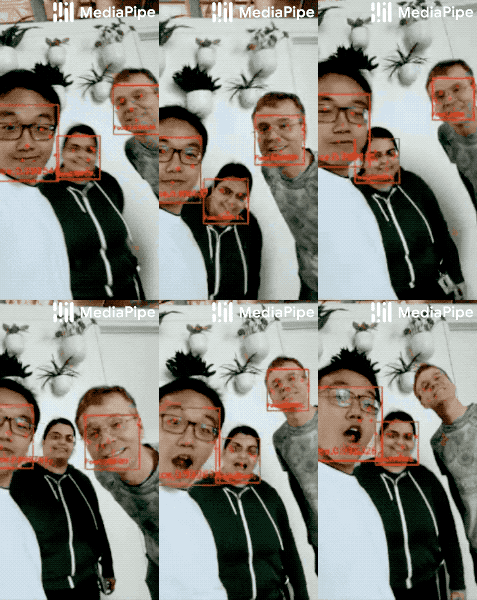](https://google.github.io/mediapipe/solutions/face_detection) | [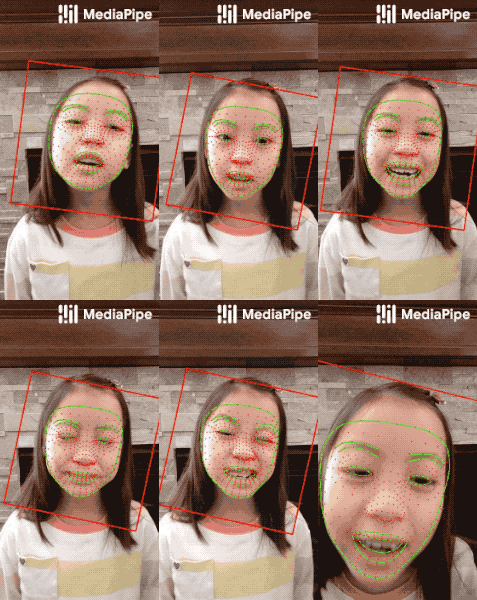](https://google.github.io/mediapipe/solutions/face_mesh) | [](https://google.github.io/mediapipe/solutions/iris) | [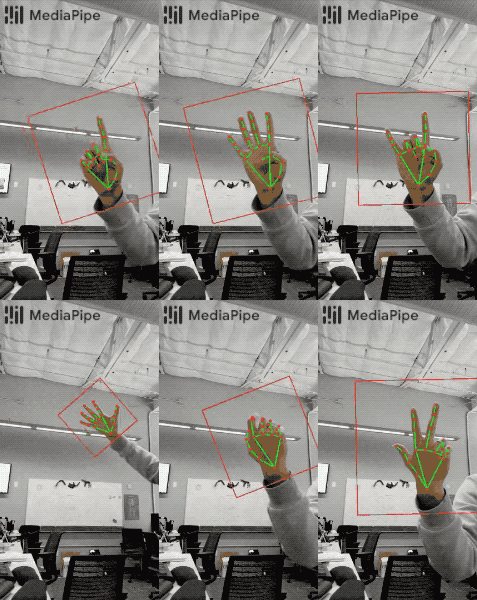](https://google.github.io/mediapipe/solutions/hands) | [](https://google.github.io/mediapipe/solutions/pose) | [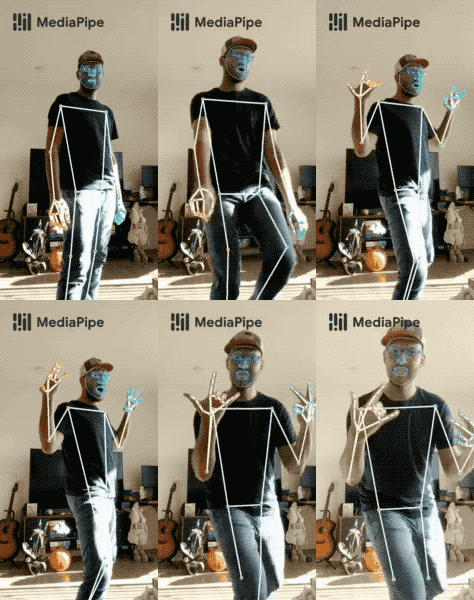](https://google.github.io/mediapipe/solutions/holistic)
|
||||
|
||||
Hair Segmentation | Object Detection | Box Tracking | Instant Motion Tracking | Objectron | KNIFT
|
||||
:-------------------------------------------------------------------------------------------------------------------------------------: | :----------------------------------------------------------------------------------------------------------------------------------: | :-------------------------------------------------------------------------------------------------------------------------: | :---------------------------------------------------------------------------------------------------------------------------------------------------: | :-------------------------------------------------------------------------------------------------------------------: | :---:
|
||||
[](https://google.github.io/mediapipe/solutions/hair_segmentation) | [](https://google.github.io/mediapipe/solutions/object_detection) | [](https://google.github.io/mediapipe/solutions/box_tracking) | [](https://google.github.io/mediapipe/solutions/instant_motion_tracking) | [](https://google.github.io/mediapipe/solutions/objectron) | [](https://google.github.io/mediapipe/solutions/knift)
|
||||
[](https://google.github.io/mediapipe/solutions/hair_segmentation) | [](https://google.github.io/mediapipe/solutions/object_detection) | [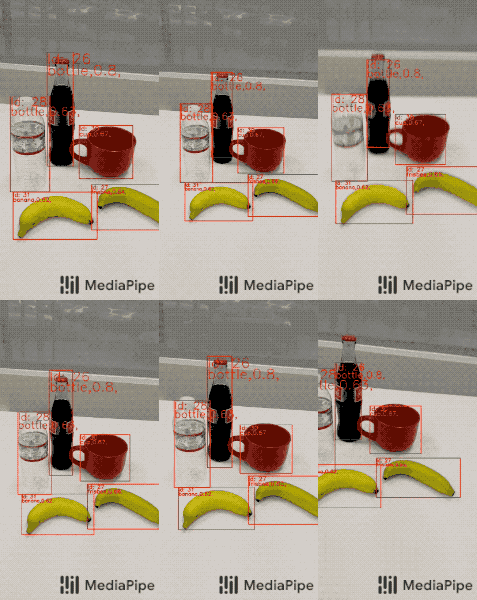](https://google.github.io/mediapipe/solutions/box_tracking) | [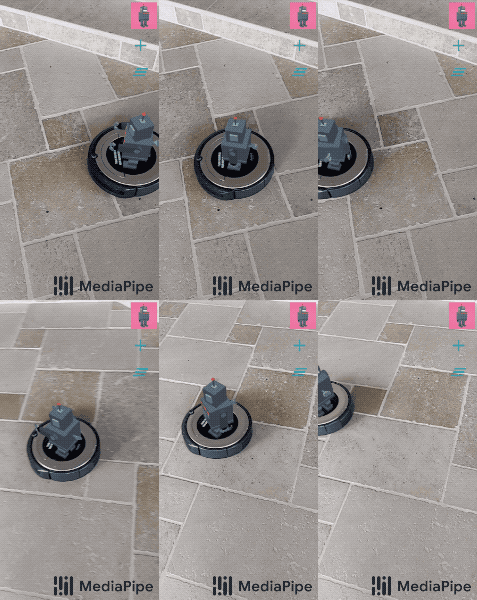](https://google.github.io/mediapipe/solutions/instant_motion_tracking) | [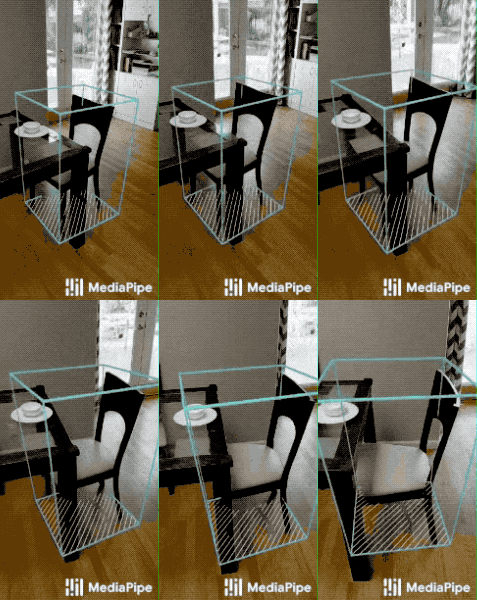](https://google.github.io/mediapipe/solutions/objectron) | [](https://google.github.io/mediapipe/solutions/knift)
|
||||
|
||||
<!-- []() in the first cell is needed to preserve table formatting in GitHub Pages. -->
|
||||
<!-- Whenever this table is updated, paste a copy to solutions/solutions.md. -->
|
||||
@@ -40,11 +40,12 @@ Hair Segmentation
|
||||
[Hands](https://google.github.io/mediapipe/solutions/hands) | ✅ | ✅ | ✅ | ✅ | ✅ |
|
||||
[Pose](https://google.github.io/mediapipe/solutions/pose) | ✅ | ✅ | ✅ | ✅ | ✅ |
|
||||
[Holistic](https://google.github.io/mediapipe/solutions/holistic) | ✅ | ✅ | ✅ | ✅ | ✅ |
|
||||
[Selfie Segmentation](https://google.github.io/mediapipe/solutions/selfie_segmentation) | ✅ | ✅ | ✅ | ✅ | ✅ |
|
||||
[Hair Segmentation](https://google.github.io/mediapipe/solutions/hair_segmentation) | ✅ | | ✅ | | |
|
||||
[Object Detection](https://google.github.io/mediapipe/solutions/object_detection) | ✅ | ✅ | ✅ | | | ✅
|
||||
[Box Tracking](https://google.github.io/mediapipe/solutions/box_tracking) | ✅ | ✅ | ✅ | | |
|
||||
[Instant Motion Tracking](https://google.github.io/mediapipe/solutions/instant_motion_tracking) | ✅ | | | | |
|
||||
[Objectron](https://google.github.io/mediapipe/solutions/objectron) | ✅ | | ✅ | ✅ | |
|
||||
[Objectron](https://google.github.io/mediapipe/solutions/objectron) | ✅ | | ✅ | ✅ | ✅ |
|
||||
[KNIFT](https://google.github.io/mediapipe/solutions/knift) | ✅ | | | | |
|
||||
[AutoFlip](https://google.github.io/mediapipe/solutions/autoflip) | | | ✅ | | |
|
||||
[MediaSequence](https://google.github.io/mediapipe/solutions/media_sequence) | | | ✅ | | |
|
||||
@@ -54,46 +55,22 @@ See also
|
||||
[MediaPipe Models and Model Cards](https://google.github.io/mediapipe/solutions/models)
|
||||
for ML models released in MediaPipe.
|
||||
|
||||
## MediaPipe in Python
|
||||
|
||||
MediaPipe offers customizable Python solutions as a prebuilt Python package on
|
||||
[PyPI](https://pypi.org/project/mediapipe/), which can be installed simply with
|
||||
`pip install mediapipe`. It also provides tools for users to build their own
|
||||
solutions. Please see
|
||||
[MediaPipe in Python](https://google.github.io/mediapipe/getting_started/python)
|
||||
for more info.
|
||||
|
||||
## MediaPipe on the Web
|
||||
|
||||
MediaPipe on the Web is an effort to run the same ML solutions built for mobile
|
||||
and desktop also in web browsers. The official API is under construction, but
|
||||
the core technology has been proven effective. Please see
|
||||
[MediaPipe on the Web](https://developers.googleblog.com/2020/01/mediapipe-on-web.html)
|
||||
in Google Developers Blog for details.
|
||||
|
||||
You can use the following links to load a demo in the MediaPipe Visualizer, and
|
||||
over there click the "Runner" icon in the top bar like shown below. The demos
|
||||
use your webcam video as input, which is processed all locally in real-time and
|
||||
never leaves your device.
|
||||
|
||||

|
||||
|
||||
* [MediaPipe Face Detection](https://viz.mediapipe.dev/demo/face_detection)
|
||||
* [MediaPipe Iris](https://viz.mediapipe.dev/demo/iris_tracking)
|
||||
* [MediaPipe Iris: Depth-from-Iris](https://viz.mediapipe.dev/demo/iris_depth)
|
||||
* [MediaPipe Hands](https://viz.mediapipe.dev/demo/hand_tracking)
|
||||
* [MediaPipe Hands (palm/hand detection only)](https://viz.mediapipe.dev/demo/hand_detection)
|
||||
* [MediaPipe Pose](https://viz.mediapipe.dev/demo/pose_tracking)
|
||||
* [MediaPipe Hair Segmentation](https://viz.mediapipe.dev/demo/hair_segmentation)
|
||||
|
||||
## Getting started
|
||||
|
||||
Learn how to [install](https://google.github.io/mediapipe/getting_started/install)
|
||||
MediaPipe and
|
||||
[build example applications](https://google.github.io/mediapipe/getting_started/building_examples),
|
||||
and start exploring our ready-to-use
|
||||
[solutions](https://google.github.io/mediapipe/solutions/solutions) that you can
|
||||
further extend and customize.
|
||||
To start using MediaPipe
|
||||
[solutions](https://google.github.io/mediapipe/solutions/solutions) with only a few
|
||||
lines code, see example code and demos in
|
||||
[MediaPipe in Python](https://google.github.io/mediapipe/getting_started/python) and
|
||||
[MediaPipe in JavaScript](https://google.github.io/mediapipe/getting_started/javascript).
|
||||
|
||||
To use MediaPipe in C++, Android and iOS, which allow further customization of
|
||||
the [solutions](https://google.github.io/mediapipe/solutions/solutions) as well as
|
||||
building your own, learn how to
|
||||
[install](https://google.github.io/mediapipe/getting_started/install) MediaPipe and
|
||||
start building example applications in
|
||||
[C++](https://google.github.io/mediapipe/getting_started/cpp),
|
||||
[Android](https://google.github.io/mediapipe/getting_started/android) and
|
||||
[iOS](https://google.github.io/mediapipe/getting_started/ios).
|
||||
|
||||
The source code is hosted in the
|
||||
[MediaPipe Github repository](https://github.com/google/mediapipe), and you can
|
||||
@@ -102,6 +79,13 @@ run code search using
|
||||
|
||||
## Publications
|
||||
|
||||
* [Bringing artworks to life with AR](https://developers.googleblog.com/2021/07/bringing-artworks-to-life-with-ar.html)
|
||||
in Google Developers Blog
|
||||
* [Prosthesis control via Mirru App using MediaPipe hand tracking](https://developers.googleblog.com/2021/05/control-your-mirru-prosthesis-with-mediapipe-hand-tracking.html)
|
||||
in Google Developers Blog
|
||||
* [SignAll SDK: Sign language interface using MediaPipe is now available for
|
||||
developers](https://developers.googleblog.com/2021/04/signall-sdk-sign-language-interface-using-mediapipe-now-available.html)
|
||||
in Google Developers Blog
|
||||
* [MediaPipe Holistic - Simultaneous Face, Hand and Pose Prediction, on Device](https://ai.googleblog.com/2020/12/mediapipe-holistic-simultaneous-face.html)
|
||||
in Google AI Blog
|
||||
* [Background Features in Google Meet, Powered by Web ML](https://ai.googleblog.com/2020/10/background-features-in-google-meet.html)
|
||||
@@ -152,8 +136,8 @@ run code search using
|
||||
|
||||
## Community
|
||||
|
||||
* [Awesome MediaPipe](https://mediapipe.org) - A curated list of awesome
|
||||
MediaPipe related frameworks, libraries and software
|
||||
* [Awesome MediaPipe](https://mediapipe.page.link/awesome-mediapipe) - A
|
||||
curated list of awesome MediaPipe related frameworks, libraries and software
|
||||
* [Slack community](https://mediapipe.page.link/joinslack) for MediaPipe users
|
||||
* [Discuss](https://groups.google.com/forum/#!forum/mediapipe) - General
|
||||
community discussion around MediaPipe
|
||||
|
||||
@@ -2,6 +2,12 @@ workspace(name = "mediapipe")
|
||||
|
||||
load("@bazel_tools//tools/build_defs/repo:http.bzl", "http_archive")
|
||||
|
||||
# Protobuf expects an //external:python_headers target
|
||||
bind(
|
||||
name = "python_headers",
|
||||
actual = "@local_config_python//:python_headers",
|
||||
)
|
||||
|
||||
http_archive(
|
||||
name = "bazel_skylib",
|
||||
type = "tar.gz",
|
||||
@@ -16,11 +22,11 @@ bazel_skylib_workspace()
|
||||
load("@bazel_skylib//lib:versions.bzl", "versions")
|
||||
versions.check(minimum_bazel_version = "3.7.2")
|
||||
|
||||
# ABSL cpp library lts_2020_09_23
|
||||
# ABSL cpp library lts_2021_03_24, patch 2.
|
||||
http_archive(
|
||||
name = "com_google_absl",
|
||||
urls = [
|
||||
"https://github.com/abseil/abseil-cpp/archive/20200923.tar.gz",
|
||||
"https://github.com/abseil/abseil-cpp/archive/refs/tags/20210324.2.tar.gz",
|
||||
],
|
||||
# Remove after https://github.com/abseil/abseil-cpp/issues/326 is solved.
|
||||
patches = [
|
||||
@@ -29,14 +35,15 @@ http_archive(
|
||||
patch_args = [
|
||||
"-p1",
|
||||
],
|
||||
strip_prefix = "abseil-cpp-20200923",
|
||||
sha256 = "b3744a4f7a249d5eaf2309daad597631ce77ea62e0fc6abffbab4b4c3dc0fc08"
|
||||
strip_prefix = "abseil-cpp-20210324.2",
|
||||
sha256 = "59b862f50e710277f8ede96f083a5bb8d7c9595376146838b9580be90374ee1f"
|
||||
)
|
||||
|
||||
http_archive(
|
||||
name = "rules_cc",
|
||||
strip_prefix = "rules_cc-master",
|
||||
urls = ["https://github.com/bazelbuild/rules_cc/archive/master.zip"],
|
||||
strip_prefix = "rules_cc-2f8c04c04462ab83c545ab14c0da68c3b4c96191",
|
||||
# The commit can be updated if the build passes. Last updated 6/23/22.
|
||||
urls = ["https://github.com/bazelbuild/rules_cc/archive/2f8c04c04462ab83c545ab14c0da68c3b4c96191.zip"],
|
||||
)
|
||||
|
||||
http_archive(
|
||||
@@ -53,26 +60,20 @@ rules_foreign_cc_dependencies()
|
||||
all_content = """filegroup(name = "all", srcs = glob(["**"]), visibility = ["//visibility:public"])"""
|
||||
|
||||
# GoogleTest/GoogleMock framework. Used by most unit-tests.
|
||||
# Last updated 2020-06-30.
|
||||
# Last updated 2021-07-02.
|
||||
http_archive(
|
||||
name = "com_google_googletest",
|
||||
urls = ["https://github.com/google/googletest/archive/aee0f9d9b5b87796ee8a0ab26b7587ec30e8858e.zip"],
|
||||
patches = [
|
||||
# fix for https://github.com/google/googletest/issues/2817
|
||||
"@//third_party:com_google_googletest_9d580ea80592189e6d44fa35bcf9cdea8bf620d6.diff"
|
||||
],
|
||||
patch_args = [
|
||||
"-p1",
|
||||
],
|
||||
strip_prefix = "googletest-aee0f9d9b5b87796ee8a0ab26b7587ec30e8858e",
|
||||
sha256 = "04a1751f94244307cebe695a69cc945f9387a80b0ef1af21394a490697c5c895",
|
||||
urls = ["https://github.com/google/googletest/archive/4ec4cd23f486bf70efcc5d2caa40f24368f752e3.zip"],
|
||||
strip_prefix = "googletest-4ec4cd23f486bf70efcc5d2caa40f24368f752e3",
|
||||
sha256 = "de682ea824bfffba05b4e33b67431c247397d6175962534305136aa06f92e049",
|
||||
)
|
||||
|
||||
# Google Benchmark library.
|
||||
# Google Benchmark library v1.6.1 released on 2022-01-10.
|
||||
http_archive(
|
||||
name = "com_google_benchmark",
|
||||
urls = ["https://github.com/google/benchmark/archive/master.zip"],
|
||||
strip_prefix = "benchmark-master",
|
||||
urls = ["https://github.com/google/benchmark/archive/refs/tags/v1.6.1.tar.gz"],
|
||||
strip_prefix = "benchmark-1.6.1",
|
||||
sha256 = "6132883bc8c9b0df5375b16ab520fac1a85dc9e4cf5be59480448ece74b278d4",
|
||||
build_file = "@//third_party:benchmark.BUILD",
|
||||
)
|
||||
|
||||
@@ -129,16 +130,16 @@ http_archive(
|
||||
# ...but the Java download is currently broken, so we use the "source" download.
|
||||
http_archive(
|
||||
name = "com_google_protobuf_javalite",
|
||||
sha256 = "a79d19dcdf9139fa4b81206e318e33d245c4c9da1ffed21c87288ed4380426f9",
|
||||
strip_prefix = "protobuf-3.11.4",
|
||||
urls = ["https://github.com/protocolbuffers/protobuf/archive/v3.11.4.tar.gz"],
|
||||
sha256 = "87407cd28e7a9c95d9f61a098a53cf031109d451a7763e7dd1253abf8b4df422",
|
||||
strip_prefix = "protobuf-3.19.1",
|
||||
urls = ["https://github.com/protocolbuffers/protobuf/archive/v3.19.1.tar.gz"],
|
||||
)
|
||||
|
||||
http_archive(
|
||||
name = "com_google_protobuf",
|
||||
sha256 = "a79d19dcdf9139fa4b81206e318e33d245c4c9da1ffed21c87288ed4380426f9",
|
||||
strip_prefix = "protobuf-3.11.4",
|
||||
urls = ["https://github.com/protocolbuffers/protobuf/archive/v3.11.4.tar.gz"],
|
||||
sha256 = "87407cd28e7a9c95d9f61a098a53cf031109d451a7763e7dd1253abf8b4df422",
|
||||
strip_prefix = "protobuf-3.19.1",
|
||||
urls = ["https://github.com/protocolbuffers/protobuf/archive/v3.19.1.tar.gz"],
|
||||
patches = [
|
||||
"@//third_party:com_google_protobuf_fixes.diff"
|
||||
],
|
||||
@@ -147,12 +148,50 @@ http_archive(
|
||||
],
|
||||
)
|
||||
|
||||
load("//third_party/flatbuffers:workspace.bzl", flatbuffers = "repo")
|
||||
flatbuffers()
|
||||
|
||||
http_archive(
|
||||
name = "com_google_audio_tools",
|
||||
strip_prefix = "multichannel-audio-tools-master",
|
||||
urls = ["https://github.com/google/multichannel-audio-tools/archive/master.zip"],
|
||||
)
|
||||
|
||||
# sentencepiece
|
||||
http_archive(
|
||||
name = "com_google_sentencepiece",
|
||||
strip_prefix = "sentencepiece-1.0.0",
|
||||
sha256 = "c05901f30a1d0ed64cbcf40eba08e48894e1b0e985777217b7c9036cac631346",
|
||||
urls = [
|
||||
"https://github.com/google/sentencepiece/archive/1.0.0.zip",
|
||||
],
|
||||
repo_mapping = {"@com_google_glog" : "@com_github_glog_glog"},
|
||||
)
|
||||
|
||||
http_archive(
|
||||
name = "org_tensorflow_text",
|
||||
sha256 = "f64647276f7288d1b1fe4c89581d51404d0ce4ae97f2bcc4c19bd667549adca8",
|
||||
strip_prefix = "text-2.2.0",
|
||||
urls = [
|
||||
"https://github.com/tensorflow/text/archive/v2.2.0.zip",
|
||||
],
|
||||
patches = [
|
||||
"//third_party:tensorflow_text_remove_tf_deps.diff",
|
||||
"//third_party:tensorflow_text_a0f49e63.diff",
|
||||
],
|
||||
patch_args = ["-p1"],
|
||||
repo_mapping = {"@com_google_re2": "@com_googlesource_code_re2"},
|
||||
)
|
||||
|
||||
http_archive(
|
||||
name = "com_googlesource_code_re2",
|
||||
sha256 = "e06b718c129f4019d6e7aa8b7631bee38d3d450dd980246bfaf493eb7db67868",
|
||||
strip_prefix = "re2-fe4a310131c37f9a7e7f7816fa6ce2a8b27d65a8",
|
||||
urls = [
|
||||
"https://github.com/google/re2/archive/fe4a310131c37f9a7e7f7816fa6ce2a8b27d65a8.tar.gz",
|
||||
],
|
||||
)
|
||||
|
||||
# 2020-07-09
|
||||
http_archive(
|
||||
name = "pybind11_bazel",
|
||||
@@ -161,28 +200,38 @@ http_archive(
|
||||
sha256 = "75922da3a1bdb417d820398eb03d4e9bd067c4905a4246d35a44c01d62154d91",
|
||||
)
|
||||
|
||||
# Point to the commit that deprecates the usage of Eigen::MappedSparseMatrix.
|
||||
http_archive(
|
||||
name = "pybind11",
|
||||
urls = [
|
||||
"https://storage.googleapis.com/mirror.tensorflow.org/github.com/pybind/pybind11/archive/v2.4.3.tar.gz",
|
||||
"https://github.com/pybind/pybind11/archive/v2.4.3.tar.gz",
|
||||
"https://github.com/pybind/pybind11/archive/70a58c577eaf067748c2ec31bfd0b0a614cffba6.zip",
|
||||
],
|
||||
sha256 = "1eed57bc6863190e35637290f97a20c81cfe4d9090ac0a24f3bbf08f265eb71d",
|
||||
strip_prefix = "pybind11-2.4.3",
|
||||
sha256 = "b971842fab1b5b8f3815a2302331782b7d137fef0e06502422bc4bc360f4956c",
|
||||
strip_prefix = "pybind11-70a58c577eaf067748c2ec31bfd0b0a614cffba6",
|
||||
build_file = "@pybind11_bazel//:pybind11.BUILD",
|
||||
)
|
||||
|
||||
http_archive(
|
||||
name = "pybind11_protobuf",
|
||||
sha256 = "baa1f53568283630a5055c85f0898b8810f7a6431bd01bbaedd32b4c1defbcb1",
|
||||
strip_prefix = "pybind11_protobuf-3594106f2df3d725e65015ffb4c7886d6eeee683",
|
||||
urls = [
|
||||
"https://github.com/pybind/pybind11_protobuf/archive/3594106f2df3d725e65015ffb4c7886d6eeee683.tar.gz",
|
||||
],
|
||||
)
|
||||
|
||||
# Point to the commit that deprecates the usage of Eigen::MappedSparseMatrix.
|
||||
http_archive(
|
||||
name = "ceres_solver",
|
||||
url = "https://github.com/ceres-solver/ceres-solver/archive/2.0.0.zip",
|
||||
url = "https://github.com/ceres-solver/ceres-solver/archive/123fba61cf2611a3c8bddc9d91416db26b10b558.zip",
|
||||
patches = [
|
||||
"@//third_party:ceres_solver_compatibility_fixes.diff"
|
||||
],
|
||||
patch_args = [
|
||||
"-p1",
|
||||
],
|
||||
strip_prefix = "ceres-solver-2.0.0",
|
||||
sha256 = "db12d37b4cebb26353ae5b7746c7985e00877baa8e7b12dc4d3a1512252fff3b"
|
||||
strip_prefix = "ceres-solver-123fba61cf2611a3c8bddc9d91416db26b10b558",
|
||||
sha256 = "8b7b16ceb363420e0fd499576daf73fa338adb0b1449f58bea7862766baa1ac7"
|
||||
)
|
||||
|
||||
http_archive(
|
||||
@@ -207,7 +256,10 @@ new_local_repository(
|
||||
new_local_repository(
|
||||
name = "macos_opencv",
|
||||
build_file = "@//third_party:opencv_macos.BUILD",
|
||||
path = "/usr/local/opt/opencv@3",
|
||||
# For local MacOS builds, the path should point to an opencv@3 installation.
|
||||
# If you edit the path here, you will also need to update the corresponding
|
||||
# prefix in "opencv_macos.BUILD".
|
||||
path = "/usr/local",
|
||||
)
|
||||
|
||||
new_local_repository(
|
||||
@@ -242,21 +294,26 @@ http_archive(
|
||||
url = "https://github.com/opencv/opencv/releases/download/3.2.0/opencv-3.2.0-ios-framework.zip",
|
||||
)
|
||||
|
||||
# You may run setup_android.sh to install Android SDK and NDK.
|
||||
android_ndk_repository(
|
||||
name = "androidndk",
|
||||
)
|
||||
|
||||
android_sdk_repository(
|
||||
name = "androidsdk",
|
||||
http_archive(
|
||||
name = "stblib",
|
||||
strip_prefix = "stb-b42009b3b9d4ca35bc703f5310eedc74f584be58",
|
||||
sha256 = "13a99ad430e930907f5611325ec384168a958bf7610e63e60e2fd8e7b7379610",
|
||||
urls = ["https://github.com/nothings/stb/archive/b42009b3b9d4ca35bc703f5310eedc74f584be58.tar.gz"],
|
||||
build_file = "@//third_party:stblib.BUILD",
|
||||
patches = [
|
||||
"@//third_party:stb_image_impl.diff"
|
||||
],
|
||||
patch_args = [
|
||||
"-p1",
|
||||
],
|
||||
)
|
||||
|
||||
# iOS basic build deps.
|
||||
|
||||
http_archive(
|
||||
name = "build_bazel_rules_apple",
|
||||
sha256 = "7a7afdd4869bb201c9352eed2daf37294d42b093579b70423490c1b4d4f6ce42",
|
||||
url = "https://github.com/bazelbuild/rules_apple/releases/download/0.19.0/rules_apple.0.19.0.tar.gz",
|
||||
sha256 = "77e8bf6fda706f420a55874ae6ee4df0c9d95da6c7838228b26910fc82eea5a2",
|
||||
url = "https://github.com/bazelbuild/rules_apple/releases/download/0.32.0/rules_apple.0.32.0.tar.gz",
|
||||
patches = [
|
||||
# Bypass checking ios unit test runner when building MP ios applications.
|
||||
"@//third_party:build_bazel_rules_apple_bypass_test_runner_check.diff"
|
||||
@@ -282,10 +339,9 @@ swift_rules_dependencies()
|
||||
|
||||
http_archive(
|
||||
name = "build_bazel_apple_support",
|
||||
sha256 = "122ebf7fe7d1c8e938af6aeaee0efe788a3a2449ece5a8d6a428cb18d6f88033",
|
||||
sha256 = "741366f79d900c11e11d8efd6cc6c66a31bfb2451178b58e0b5edc6f1db17b35",
|
||||
urls = [
|
||||
"https://storage.googleapis.com/mirror.tensorflow.org/github.com/bazelbuild/apple_support/releases/download/0.7.1/apple_support.0.7.1.tar.gz",
|
||||
"https://github.com/bazelbuild/apple_support/releases/download/0.7.1/apple_support.0.7.1.tar.gz",
|
||||
"https://github.com/bazelbuild/apple_support/releases/download/0.10.0/apple_support.0.10.0.tar.gz"
|
||||
],
|
||||
)
|
||||
|
||||
@@ -324,7 +380,10 @@ load("@rules_jvm_external//:defs.bzl", "maven_install")
|
||||
maven_install(
|
||||
artifacts = [
|
||||
"androidx.concurrent:concurrent-futures:1.0.0-alpha03",
|
||||
"androidx.lifecycle:lifecycle-common:2.2.0",
|
||||
"androidx.lifecycle:lifecycle-common:2.3.1",
|
||||
"androidx.activity:activity:1.2.2",
|
||||
"androidx.exifinterface:exifinterface:1.3.3",
|
||||
"androidx.fragment:fragment:1.3.4",
|
||||
"androidx.annotation:annotation:aar:1.1.0",
|
||||
"androidx.appcompat:appcompat:aar:1.1.0-rc01",
|
||||
"androidx.camera:camera-core:1.0.0-beta10",
|
||||
@@ -337,9 +396,14 @@ maven_install(
|
||||
"androidx.test.espresso:espresso-core:3.1.1",
|
||||
"com.github.bumptech.glide:glide:4.11.0",
|
||||
"com.google.android.material:material:aar:1.0.0-rc01",
|
||||
"com.google.code.findbugs:jsr305:3.0.2",
|
||||
"com.google.flogger:flogger-system-backend:0.3.1",
|
||||
"com.google.flogger:flogger:0.3.1",
|
||||
"com.google.auto.value:auto-value:1.8.1",
|
||||
"com.google.auto.value:auto-value-annotations:1.8.1",
|
||||
"com.google.code.findbugs:jsr305:latest.release",
|
||||
"com.google.android.datatransport:transport-api:3.0.0",
|
||||
"com.google.android.datatransport:transport-backend-cct:3.1.0",
|
||||
"com.google.android.datatransport:transport-runtime:3.1.0",
|
||||
"com.google.flogger:flogger-system-backend:0.6",
|
||||
"com.google.flogger:flogger:0.6",
|
||||
"com.google.guava:guava:27.0.1-android",
|
||||
"com.google.guava:listenablefuture:1.0",
|
||||
"junit:junit:4.12",
|
||||
@@ -366,10 +430,29 @@ http_archive(
|
||||
],
|
||||
)
|
||||
|
||||
# Tensorflow repo should always go after the other external dependencies.
|
||||
# 2021-03-25
|
||||
_TENSORFLOW_GIT_COMMIT = "c67f68021824410ebe9f18513b8856ac1c6d4887"
|
||||
_TENSORFLOW_SHA256= "fd07d0b39422dc435e268c5e53b2646a8b4b1e3151b87837b43f86068faae87f"
|
||||
# Load Zlib before initializing TensorFlow to guarantee that the target
|
||||
# @zlib//:mini_zlib is available
|
||||
http_archive(
|
||||
name = "zlib",
|
||||
build_file = "//third_party:zlib.BUILD",
|
||||
sha256 = "c3e5e9fdd5004dcb542feda5ee4f0ff0744628baf8ed2dd5d66f8ca1197cb1a1",
|
||||
strip_prefix = "zlib-1.2.11",
|
||||
urls = [
|
||||
"http://mirror.bazel.build/zlib.net/fossils/zlib-1.2.11.tar.gz",
|
||||
"http://zlib.net/fossils/zlib-1.2.11.tar.gz", # 2017-01-15
|
||||
],
|
||||
patches = [
|
||||
"@//third_party:zlib.diff",
|
||||
],
|
||||
patch_args = [
|
||||
"-p1",
|
||||
],
|
||||
)
|
||||
|
||||
# TensorFlow repo should always go after the other external dependencies.
|
||||
# TF on 2022-08-10.
|
||||
_TENSORFLOW_GIT_COMMIT = "af1d5bc4fbb66d9e6cc1cf89503014a99233583b"
|
||||
_TENSORFLOW_SHA256 = "f85a5443264fc58a12d136ca6a30774b5bc25ceaf7d114d97f252351b3c3a2cb"
|
||||
http_archive(
|
||||
name = "org_tensorflow",
|
||||
urls = [
|
||||
@@ -377,7 +460,8 @@ http_archive(
|
||||
],
|
||||
patches = [
|
||||
"@//third_party:org_tensorflow_compatibility_fixes.diff",
|
||||
"@//third_party:org_tensorflow_objc_cxx17.diff",
|
||||
# Diff is generated with a script, don't update it manually.
|
||||
"@//third_party:org_tensorflow_custom_ops.diff",
|
||||
],
|
||||
patch_args = [
|
||||
"-p1",
|
||||
@@ -390,3 +474,21 @@ load("@org_tensorflow//tensorflow:workspace3.bzl", "tf_workspace3")
|
||||
tf_workspace3()
|
||||
load("@org_tensorflow//tensorflow:workspace2.bzl", "tf_workspace2")
|
||||
tf_workspace2()
|
||||
|
||||
# Edge TPU
|
||||
http_archive(
|
||||
name = "libedgetpu",
|
||||
sha256 = "14d5527a943a25bc648c28a9961f954f70ba4d79c0a9ca5ae226e1831d72fe80",
|
||||
strip_prefix = "libedgetpu-3164995622300286ef2bb14d7fdc2792dae045b7",
|
||||
urls = [
|
||||
"https://github.com/google-coral/libedgetpu/archive/3164995622300286ef2bb14d7fdc2792dae045b7.tar.gz"
|
||||
],
|
||||
)
|
||||
load("@libedgetpu//:workspace.bzl", "libedgetpu_dependencies")
|
||||
libedgetpu_dependencies()
|
||||
|
||||
load("@coral_crosstool//:configure.bzl", "cc_crosstool")
|
||||
cc_crosstool(name = "crosstool")
|
||||
|
||||
load("//third_party:external_files.bzl", "external_files")
|
||||
external_files()
|
||||
|
||||
@@ -109,7 +109,7 @@ for app in ${apps}; do
|
||||
if [[ ${category} != "shoe" ]]; then
|
||||
bazel_flags_extended+=(--define ${category}=true)
|
||||
fi
|
||||
bazel "${bazel_flags_extended[@]}"
|
||||
bazelisk "${bazel_flags_extended[@]}"
|
||||
cp -f "${bin}" "${apk}"
|
||||
fi
|
||||
apks+=(${apk})
|
||||
@@ -120,7 +120,7 @@ for app in ${apps}; do
|
||||
if [[ ${app_name} == "templatematchingcpu" ]]; then
|
||||
switch_to_opencv_4
|
||||
fi
|
||||
bazel "${bazel_flags[@]}"
|
||||
bazelisk "${bazel_flags[@]}"
|
||||
cp -f "${bin}" "${apk}"
|
||||
if [[ ${app_name} == "templatematchingcpu" ]]; then
|
||||
switch_to_opencv_3
|
||||
|
||||
@@ -17,15 +17,15 @@
|
||||
# Script to build/run all MediaPipe desktop example apps (with webcam input).
|
||||
#
|
||||
# To build and run all apps and store them in out_dir:
|
||||
# $ ./build_ios_examples.sh -d out_dir
|
||||
# $ ./build_desktop_examples.sh -d out_dir
|
||||
# Omitting -d and the associated directory saves all generated apps in the
|
||||
# current directory.
|
||||
# To build all apps and store them in out_dir:
|
||||
# $ ./build_ios_examples.sh -d out_dir -b
|
||||
# $ ./build_desktop_examples.sh -d out_dir -b
|
||||
# Omitting -d and the associated directory saves all generated apps in the
|
||||
# current directory.
|
||||
# To run all apps already stored in out_dir:
|
||||
# $ ./build_ios_examples.sh -d out_dir -r
|
||||
# $ ./build_desktop_examples.sh -d out_dir -r
|
||||
# Omitting -d and the associated directory assumes all apps are in the current
|
||||
# directory.
|
||||
|
||||
@@ -83,7 +83,7 @@ for app in ${apps}; do
|
||||
bazel_flags=("${default_bazel_flags[@]}")
|
||||
bazel_flags+=(${target})
|
||||
|
||||
bazel "${bazel_flags[@]}"
|
||||
bazelisk "${bazel_flags[@]}"
|
||||
cp -f "${bin_dir}/${app}/"*"_cpu" "${out_dir}"
|
||||
fi
|
||||
if [[ $build_only == false ]]; then
|
||||
@@ -97,6 +97,7 @@ for app in ${apps}; do
|
||||
if [[ ${target_name} == "holistic_tracking" ||
|
||||
${target_name} == "iris_tracking" ||
|
||||
${target_name} == "pose_tracking" ||
|
||||
${target_name} == "selfie_segmentation" ||
|
||||
${target_name} == "upper_body_pose_tracking" ]]; then
|
||||
graph_suffix="cpu"
|
||||
else
|
||||
|
||||
@@ -71,7 +71,7 @@ for app in ${apps}; do
|
||||
bazel_flags+=(--linkopt=-s)
|
||||
fi
|
||||
|
||||
bazel "${bazel_flags[@]}"
|
||||
bazelisk "${bazel_flags[@]}"
|
||||
cp -f "${bin_dir}/${app}/"*".ipa" "${out_dir}"
|
||||
fi
|
||||
done
|
||||
|
||||
@@ -20,7 +20,7 @@ aux_links:
|
||||
- "//github.com/google/mediapipe"
|
||||
|
||||
# Footer content appears at the bottom of every page's main content
|
||||
footer_content: "© 2020 GOOGLE LLC | <a href=\"https://policies.google.com/privacy\">PRIVACY POLICY</a> | <a href=\"https://policies.google.com/terms\">TERMS OF SERVICE</a>"
|
||||
footer_content: "© GOOGLE LLC | <a href=\"https://policies.google.com/privacy\">PRIVACY POLICY</a> | <a href=\"https://policies.google.com/terms\">TERMS OF SERVICE</a>"
|
||||
|
||||
# Color scheme currently only supports "dark", "light"/nil (default), or a custom scheme that you define
|
||||
color_scheme: mediapipe
|
||||
|
||||
@@ -133,7 +133,7 @@ write outputs. After Close returns, the calculator is destroyed.
|
||||
Calculators with no inputs are referred to as sources. A source calculator
|
||||
continues to have `Process()` called as long as it returns an `Ok` status. A
|
||||
source calculator indicates that it is exhausted by returning a stop status
|
||||
(i.e. MediaPipe::tool::StatusStop).
|
||||
(i.e. [`mediaPipe::tool::StatusStop()`](https://github.com/google/mediapipe/tree/master/mediapipe/framework/tool/status_util.cc).).
|
||||
|
||||
## Identifying inputs and outputs
|
||||
|
||||
@@ -187,7 +187,7 @@ node {
|
||||
```
|
||||
|
||||
In the calculator implementation, inputs and outputs are also identified by tag
|
||||
name and index number. In the function below input are output are identified:
|
||||
name and index number. In the function below input and output are identified:
|
||||
|
||||
* By index number: The combined input stream is identified simply by index
|
||||
`0`.
|
||||
@@ -248,12 +248,70 @@ absl::Status MyCalculator::Process() {
|
||||
}
|
||||
```
|
||||
|
||||
## Calculator options
|
||||
|
||||
Calculators accept processing parameters through (1) input stream packets (2)
|
||||
input side packets, and (3) calculator options. Calculator options, if
|
||||
specified, appear as literal values in the `node_options` field of the
|
||||
`CalculatorGraphConfiguration.Node` message.
|
||||
|
||||
```
|
||||
node {
|
||||
calculator: "TfLiteInferenceCalculator"
|
||||
input_stream: "TENSORS:main_model_input"
|
||||
output_stream: "TENSORS:main_model_output"
|
||||
node_options: {
|
||||
[type.googleapis.com/mediapipe.TfLiteInferenceCalculatorOptions] {
|
||||
model_path: "mediapipe/models/detection_model.tflite"
|
||||
}
|
||||
}
|
||||
}
|
||||
```
|
||||
|
||||
The `node_options` field accepts the proto3 syntax. Alternatively, calculator
|
||||
options can be specified in the `options` field using proto2 syntax.
|
||||
|
||||
```
|
||||
node {
|
||||
calculator: "TfLiteInferenceCalculator"
|
||||
input_stream: "TENSORS:main_model_input"
|
||||
output_stream: "TENSORS:main_model_output"
|
||||
node_options: {
|
||||
[type.googleapis.com/mediapipe.TfLiteInferenceCalculatorOptions] {
|
||||
model_path: "mediapipe/models/detection_model.tflite"
|
||||
}
|
||||
}
|
||||
}
|
||||
```
|
||||
|
||||
Not all calculators accept calcuator options. In order to accept options, a
|
||||
calculator will normally define a new protobuf message type to represent its
|
||||
options, such as `PacketClonerCalculatorOptions`. The calculator will then
|
||||
read that protobuf message in its `CalculatorBase::Open` method, and possibly
|
||||
also in its `CalculatorBase::GetContract` function or its
|
||||
`CalculatorBase::Process` method. Normally, the new protobuf message type will
|
||||
be defined as a protobuf schema using a ".proto" file and a
|
||||
`mediapipe_proto_library()` build rule.
|
||||
|
||||
```
|
||||
mediapipe_proto_library(
|
||||
name = "packet_cloner_calculator_proto",
|
||||
srcs = ["packet_cloner_calculator.proto"],
|
||||
visibility = ["//visibility:public"],
|
||||
deps = [
|
||||
"//mediapipe/framework:calculator_options_proto",
|
||||
"//mediapipe/framework:calculator_proto",
|
||||
],
|
||||
)
|
||||
```
|
||||
|
||||
|
||||
## Example calculator
|
||||
|
||||
This section discusses the implementation of `PacketClonerCalculator`, which
|
||||
does a relatively simple job, and is used in many calculator graphs.
|
||||
`PacketClonerCalculator` simply produces a copy of its most recent input
|
||||
packets on demand.
|
||||
`PacketClonerCalculator` simply produces a copy of its most recent input packets
|
||||
on demand.
|
||||
|
||||
`PacketClonerCalculator` is useful when the timestamps of arriving data packets
|
||||
are not aligned perfectly. Suppose we have a room with a microphone, light
|
||||
@@ -279,8 +337,8 @@ input streams:
|
||||
imageframe of video data representing video collected from camera in the
|
||||
room with timestamp.
|
||||
|
||||
Below is the implementation of the `PacketClonerCalculator`. You can see
|
||||
the `GetContract()`, `Open()`, and `Process()` methods as well as the instance
|
||||
Below is the implementation of the `PacketClonerCalculator`. You can see the
|
||||
`GetContract()`, `Open()`, and `Process()` methods as well as the instance
|
||||
variable `current_` which holds the most recent input packets.
|
||||
|
||||
```c++
|
||||
@@ -355,7 +413,6 @@ class PacketClonerCalculator : public CalculatorBase {
|
||||
current_[i].At(cc->InputTimestamp()));
|
||||
// Add a packet to output stream of index i a packet from inputstream i
|
||||
// with timestamp common to all present inputs
|
||||
//
|
||||
} else {
|
||||
cc->Outputs().Index(i).SetNextTimestampBound(
|
||||
cc->InputTimestamp().NextAllowedInStream());
|
||||
@@ -382,7 +439,7 @@ defined your calculator class, register it with a macro invocation
|
||||
REGISTER_CALCULATOR(calculator_class_name).
|
||||
|
||||
Below is a trivial MediaPipe graph that has 3 input streams, 1 node
|
||||
(PacketClonerCalculator) and 3 output streams.
|
||||
(PacketClonerCalculator) and 2 output streams.
|
||||
|
||||
```proto
|
||||
input_stream: "room_mic_signal"
|
||||
@@ -402,6 +459,6 @@ node {
|
||||
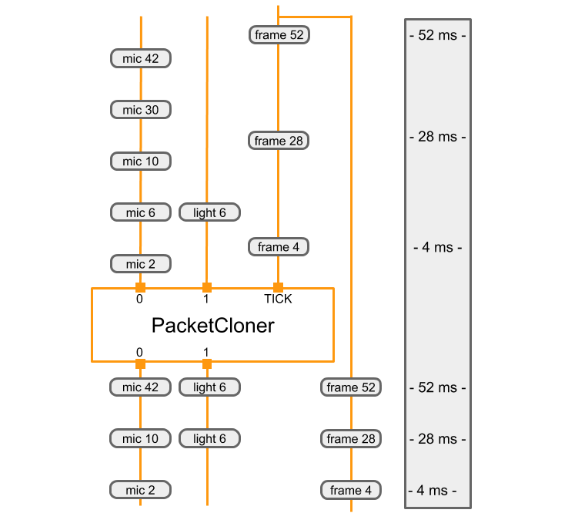
The diagram below shows how the `PacketClonerCalculator` defines its output
|
||||
packets (bottom) based on its series of input packets (top).
|
||||
|
||||
|  |
|
||||
| :---------------------------------------------------------------------------: |
|
||||
| *Each time it receives a packet on its TICK input stream, the PacketClonerCalculator outputs the most recent packet from each of its input streams. The sequence of output packets (bottom) is determined by the sequence of input packets (top) and their timestamps. The timestamps are shown along the right side of the diagram.* |
|
||||
 |
|
||||
:--------------------------------------------------------------------------: |
|
||||
*Each time it receives a packet on its TICK input stream, the PacketClonerCalculator outputs the most recent packet from each of its input streams. The sequence of output packets (bottom) is determined by the sequence of input packets (top) and their timestamps. The timestamps are shown along the right side of the diagram.* |
|
||||
|
||||
@@ -110,3 +110,12 @@ Other policies are also available, implemented using a separate kind of
|
||||
component known as an InputStreamHandler.
|
||||
|
||||
See [Synchronization](synchronization.md) for more details.
|
||||
|
||||
### Real-time streams
|
||||
|
||||
MediaPipe calculator graphs are often used to process streams of video or audio
|
||||
frames for interactive applications. Normally, each Calculator runs as soon as
|
||||
all of its input packets for a given timestamp become available. Calculators
|
||||
used in real-time graphs need to define output timestamp bounds based on input
|
||||
timestamp bounds in order to allow downstream calculators to be scheduled
|
||||
promptly. See [Real-time Streams](realtime_streams.md) for details.
|
||||
|
||||
@@ -149,7 +149,7 @@ When possible, these calculators use platform-specific functionality to share da
|
||||
|
||||
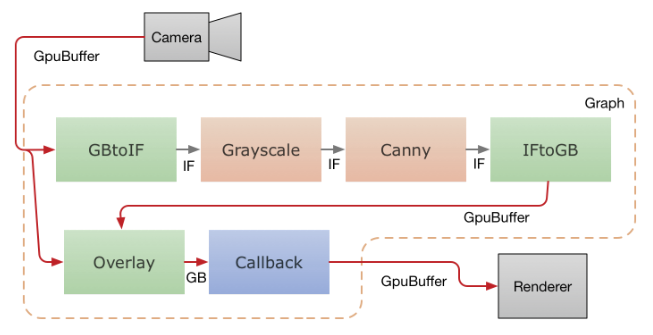
The below diagram shows the data flow in a mobile application that captures video from the camera, runs it through a MediaPipe graph, and renders the output on the screen in real time. The dashed line indicates which parts are inside the MediaPipe graph proper. This application runs a Canny edge-detection filter on the CPU using OpenCV, and overlays it on top of the original video using the GPU.
|
||||
|
||||

|
||||
|
||||
|
||||
Video frames from the camera are fed into the graph as `GpuBuffer` packets. The
|
||||
input stream is accessed by two calculators in parallel.
|
||||
|
||||
@@ -83,12 +83,12 @@ Below is an example of how to create a subgraph named `TwoPassThroughSubgraph`.
|
||||
output_stream: "out3"
|
||||
|
||||
node {
|
||||
calculator: "PassThroughculator"
|
||||
calculator: "PassThroughCalculator"
|
||||
input_stream: "out1"
|
||||
output_stream: "out2"
|
||||
}
|
||||
node {
|
||||
calculator: "PassThroughculator"
|
||||
calculator: "PassThroughCalculator"
|
||||
input_stream: "out2"
|
||||
output_stream: "out3"
|
||||
}
|
||||
@@ -159,7 +159,7 @@ Please use the `CalculatorGraphTest.Cycle` unit test in
|
||||
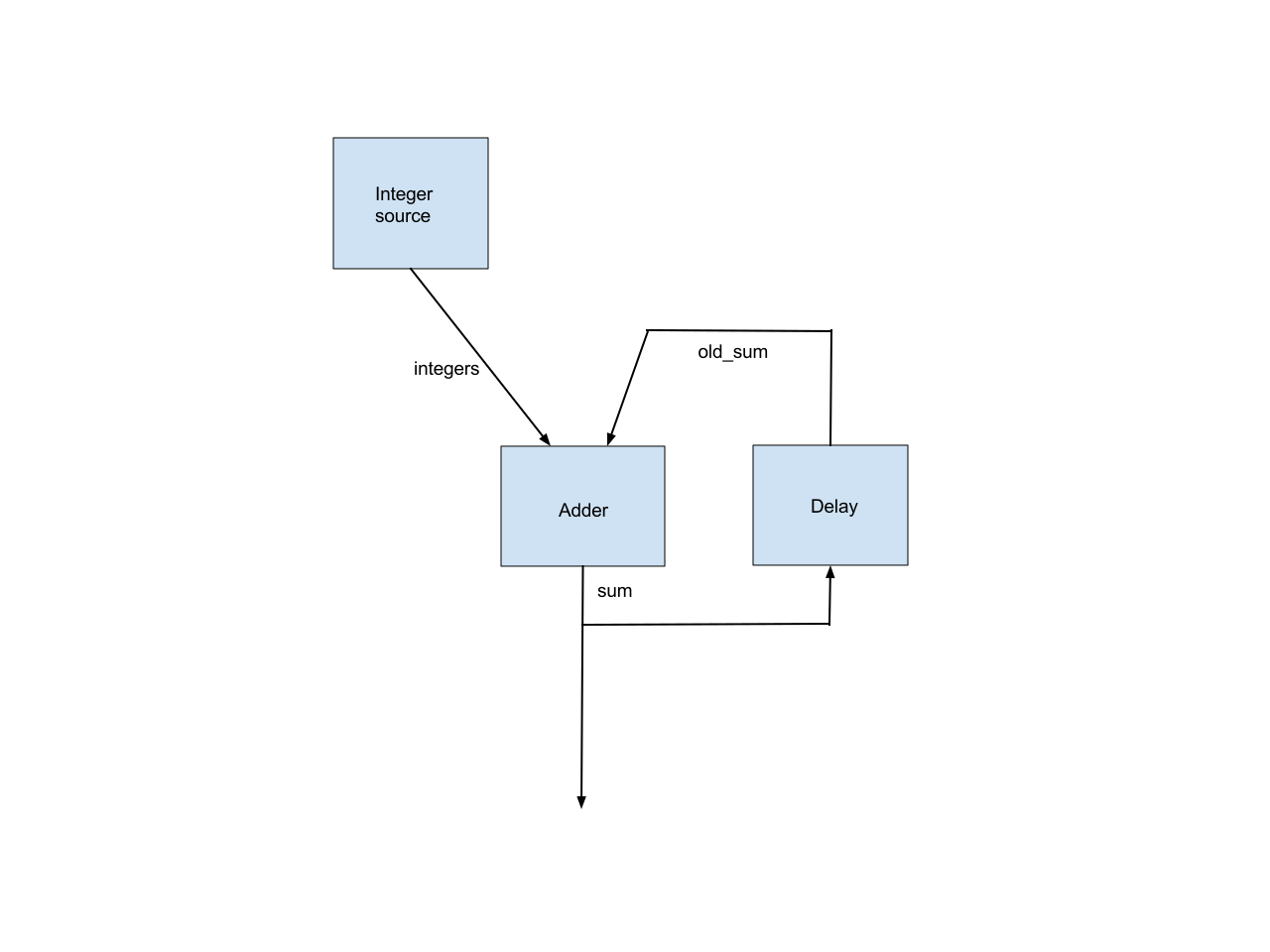
below is the cyclic graph in the test. The `sum` output of the adder is the sum
|
||||
of the integers generated by the integer source calculator.
|
||||
|
||||

|
||||
|
||||
|
||||
This simple graph illustrates all the issues in supporting cyclic graphs.
|
||||
|
||||
|
||||
@@ -0,0 +1,186 @@
|
||||
---
|
||||
layout: default
|
||||
title: Real-time Streams
|
||||
parent: Framework Concepts
|
||||
nav_order: 6
|
||||
---
|
||||
|
||||
# Real-time Streams
|
||||
{: .no_toc }
|
||||
|
||||
1. TOC
|
||||
{:toc}
|
||||
---
|
||||
|
||||
## Real-time timestamps
|
||||
|
||||
MediaPipe calculator graphs are often used to process streams of video or audio
|
||||
frames for interactive applications. The MediaPipe framework requires only that
|
||||
successive packets be assigned monotonically increasing timestamps. By
|
||||
convention, real-time calculators and graphs use the recording time or the
|
||||
presentation time of each frame as its timestamp, with each timestamp indicating
|
||||
the microseconds since `Jan/1/1970:00:00:00`. This allows packets from various
|
||||
sources to be processed in a globally consistent sequence.
|
||||
|
||||
## Real-time scheduling
|
||||
|
||||
Normally, each Calculator runs as soon as all of its input packets for a given
|
||||
timestamp become available. Normally, this happens when the calculator has
|
||||
finished processing the previous frame, and each of the calculators producing
|
||||
its inputs have finished processing the current frame. The MediaPipe scheduler
|
||||
invokes each calculator as soon as these conditions are met. See
|
||||
[Synchronization](synchronization.md) for more details.
|
||||
|
||||
## Timestamp bounds
|
||||
|
||||
When a calculator does not produce any output packets for a given timestamp, it
|
||||
can instead output a "timestamp bound" indicating that no packet will be
|
||||
produced for that timestamp. This indication is necessary to allow downstream
|
||||
calculators to run at that timestamp, even though no packet has arrived for
|
||||
certain streams for that timestamp. This is especially important for real-time
|
||||
graphs in interactive applications, where it is crucial that each calculator
|
||||
begin processing as soon as possible.
|
||||
|
||||
Consider a graph like the following:
|
||||
|
||||
```
|
||||
node {
|
||||
calculator: "A"
|
||||
input_stream: "alpha_in"
|
||||
output_stream: "alpha"
|
||||
}
|
||||
node {
|
||||
calculator: "B"
|
||||
input_stream: "alpha"
|
||||
input_stream: "foo"
|
||||
output_stream: "beta"
|
||||
}
|
||||
```
|
||||
|
||||
Suppose: at timestamp `T`, node `A` doesn't send a packet in its output stream
|
||||
`alpha`. Node `B` gets a packet in `foo` at timestamp `T` and is waiting for a
|
||||
packet in `alpha` at timestamp `T`. If `A` doesn't send `B` a timestamp bound
|
||||
update for `alpha`, `B` will keep waiting for a packet to arrive in `alpha`.
|
||||
Meanwhile, the packet queue of `foo` will accumulate packets at `T`, `T+1` and
|
||||
so on.
|
||||
|
||||
To output a packet on a stream, a calculator uses the API functions
|
||||
`CalculatorContext::Outputs` and `OutputStream::Add`. To instead output a
|
||||
timestamp bound on a stream, a calculator can use the API functions
|
||||
`CalculatorContext::Outputs` and `CalculatorContext::SetNextTimestampBound`. The
|
||||
specified bound is the lowest allowable timestamp for the next packet on the
|
||||
specified output stream. When no packet is output, a calculator will typically
|
||||
do something like:
|
||||
|
||||
```
|
||||
cc->Outputs().Tag("output_frame").SetNextTimestampBound(
|
||||
cc->InputTimestamp().NextAllowedInStream());
|
||||
```
|
||||
|
||||
The function `Timestamp::NextAllowedInStream` returns the successive timestamp.
|
||||
For example, `Timestamp(1).NextAllowedInStream() == Timestamp(2)`.
|
||||
|
||||
## Propagating timestamp bounds
|
||||
|
||||
Calculators that will be used in real-time graphs need to define output
|
||||
timestamp bounds based on input timestamp bounds in order to allow downstream
|
||||
calculators to be scheduled promptly. A common pattern is for calculators to
|
||||
output packets with the same timestamps as their input packets. In this case,
|
||||
simply outputting a packet on every call to `Calculator::Process` is sufficient
|
||||
to define output timestamp bounds.
|
||||
|
||||
However, calculators are not required to follow this common pattern for output
|
||||
timestamps, they are only required to choose monotonically increasing output
|
||||
timestamps. As a result, certain calculators must calculate timestamp bounds
|
||||
explicitly. MediaPipe provides several tools for computing appropriate timestamp
|
||||
bound for each calculator.
|
||||
|
||||
1\. **SetNextTimestampBound()** can be used to specify the timestamp bound, `t +
|
||||
1`, for an output stream.
|
||||
|
||||
```
|
||||
cc->Outputs.Tag("OUT").SetNextTimestampBound(t.NextAllowedInStream());
|
||||
```
|
||||
|
||||
Alternatively, an empty packet with timestamp `t` can be produced to specify the
|
||||
timestamp bound `t + 1`.
|
||||
|
||||
```
|
||||
cc->Outputs.Tag("OUT").Add(Packet(), t);
|
||||
```
|
||||
|
||||
The timestamp bound of an input stream is indicated by the packet or the empty
|
||||
packet on the input stream.
|
||||
|
||||
```
|
||||
Timestamp bound = cc->Inputs().Tag("IN").Value().Timestamp();
|
||||
```
|
||||
|
||||
2\. **TimestampOffset()** can be specified in order to automatically copy the
|
||||
timestamp bound from input streams to output streams.
|
||||
|
||||
```
|
||||
cc->SetTimestampOffset(0);
|
||||
```
|
||||
|
||||
This setting has the advantage of propagating timestamp bounds automatically,
|
||||
even when only timestamp bounds arrive and Calculator::Process is not invoked.
|
||||
|
||||
3\. **ProcessTimestampBounds()** can be specified in order to invoke
|
||||
`Calculator::Process` for each new "settled timestamp", where the "settled
|
||||
timestamp" is the new highest timestamp below the current timestamp bounds.
|
||||
Without `ProcessTimestampBounds()`, `Calculator::Process` is invoked only with
|
||||
one or more arriving packets.
|
||||
|
||||
```
|
||||
cc->SetProcessTimestampBounds(true);
|
||||
```
|
||||
|
||||
This setting allows a calculator to perform its own timestamp bounds calculation
|
||||
and propagation, even when only input timestamps are updated. It can be used to
|
||||
replicate the effect of `TimestampOffset()`, but it can also be used to
|
||||
calculate a timestamp bound that takes into account additional factors.
|
||||
|
||||
For example, in order to replicate `SetTimestampOffset(0)`, a calculator could
|
||||
do the following:
|
||||
|
||||
```
|
||||
absl::Status Open(CalculatorContext* cc) {
|
||||
cc->SetProcessTimestampBounds(true);
|
||||
}
|
||||
|
||||
absl::Status Process(CalculatorContext* cc) {
|
||||
cc->Outputs.Tag("OUT").SetNextTimestampBound(
|
||||
cc->InputTimestamp().NextAllowedInStream());
|
||||
}
|
||||
```
|
||||
|
||||
## Scheduling of Calculator::Open and Calculator::Close
|
||||
|
||||
`Calculator::Open` is invoked when all required input side-packets have been
|
||||
produced. Input side-packets can be provided by the enclosing application or by
|
||||
"side-packet calculators" inside the graph. Side-packets can be specified from
|
||||
outside the graph using the API's `CalculatorGraph::Initialize` and
|
||||
`CalculatorGraph::StartRun`. Side packets can be specified by calculators within
|
||||
the graph using `CalculatorGraphConfig::OutputSidePackets` and
|
||||
`OutputSidePacket::Set`.
|
||||
|
||||
Calculator::Close is invoked when all of the input streams have become `Done` by
|
||||
being closed or reaching timestamp bound `Timestamp::Done`.
|
||||
|
||||
**Note:** If the graph finishes all pending calculator execution and becomes
|
||||
`Done`, before some streams become `Done`, then MediaPipe will invoke the
|
||||
remaining calls to `Calculator::Close`, so that every calculator can produce its
|
||||
final outputs.
|
||||
|
||||
The use of `TimestampOffset` has some implications for `Calculator::Close`. A
|
||||
calculator specifying `SetTimestampOffset(0)` will by design signal that all of
|
||||
its output streams have reached `Timestamp::Done` when all of its input streams
|
||||
have reached `Timestamp::Done`, and therefore no further outputs are possible.
|
||||
This prevents such a calculator from emitting any packets during
|
||||
`Calculator::Close`. If a calculator needs to produce a summary packet during
|
||||
`Calculator::Close`, `Calculator::Process` must specify timestamp bounds such
|
||||
that at least one timestamp (such as `Timestamp::Max`) remains available during
|
||||
`Calculator::Close`. This means that such a calculator normally cannot rely upon
|
||||
`SetTimestampOffset(0)` and must instead specify timestamp bounds explicitly
|
||||
using `SetNextTimestampBounds()`.
|
||||
@@ -169,7 +169,7 @@ behavior depending on resource constraints.
|
||||
|
||||
[`CalculatorBase`]: https://github.com/google/mediapipe/tree/master/mediapipe/framework/calculator_base.h
|
||||
[`DefaultInputStreamHandler`]: https://github.com/google/mediapipe/tree/master/mediapipe/framework/stream_handler/default_input_stream_handler.h
|
||||
[`SyncSetInputStreamHandler`]: https://github.com/google/mediapipe/tree/master/mediapipe/framework/stream_handler/sync_set_input_stream_handler.h
|
||||
[`ImmediateInputStreamHandler`]: https://github.com/google/mediapipe/tree/master/mediapipe/framework/stream_handler/immediate_input_stream_handler.h
|
||||
[`SyncSetInputStreamHandler`]: https://github.com/google/mediapipe/tree/master/mediapipe/framework/stream_handler/sync_set_input_stream_handler.cc
|
||||
[`ImmediateInputStreamHandler`]: https://github.com/google/mediapipe/tree/master/mediapipe/framework/stream_handler/immediate_input_stream_handler.cc
|
||||
[`CalculatorGraphConfig::max_queue_size`]: https://github.com/google/mediapipe/tree/master/mediapipe/framework/calculator.proto
|
||||
[`FlowLimiterCalculator`]: https://github.com/google/mediapipe/tree/master/mediapipe/calculators/core/flow_limiter_calculator.cc
|
||||
|
||||
@@ -16,18 +16,20 @@ nav_order: 1
|
||||
|
||||
Please follow instructions below to build Android example apps in the supported
|
||||
MediaPipe [solutions](../solutions/solutions.md). To learn more about these
|
||||
example apps, start from [Hello World! on Android](./hello_world_android.md). To
|
||||
incorporate MediaPipe into an existing Android Studio project, see these
|
||||
[instructions](./android_archive_library.md) that use Android Archive (AAR) and
|
||||
Gradle.
|
||||
example apps, start from [Hello World! on Android](./hello_world_android.md).
|
||||
|
||||
## Building Android example apps
|
||||
To incorporate MediaPipe into Android Studio projects, see these
|
||||
[instructions](./android_solutions.md) to use the MediaPipe Android Solution
|
||||
APIs (currently in alpha) that are now available in
|
||||
[Google's Maven Repository](https://maven.google.com/web/index.html?#com.google.mediapipe).
|
||||
|
||||
## Building Android example apps with Bazel
|
||||
|
||||
### Prerequisite
|
||||
|
||||
* Install MediaPipe following these [instructions](./install.md).
|
||||
* Setup Java Runtime.
|
||||
* Setup Android SDK release 28.0.3 and above.
|
||||
* Setup Android SDK release 30.0.0 and above.
|
||||
* Setup Android NDK version between 18 and 21.
|
||||
|
||||
MediaPipe recommends setting up Android SDK and NDK via Android Studio (and see
|
||||
@@ -45,22 +47,21 @@ export ANDROID_HOME=<path to the Android SDK>
|
||||
export ANDROID_NDK_HOME=<path to the Android NDK>
|
||||
```
|
||||
|
||||
and add android_ndk_repository() and android_sdk_repository() rules into the
|
||||
[`WORKSPACE`](https://github.com/google/mediapipe/blob/master/WORKSPACE) file as
|
||||
the following:
|
||||
|
||||
```bash
|
||||
$ echo "android_sdk_repository(name = \"androidsdk\")" >> WORKSPACE
|
||||
$ echo "android_ndk_repository(name = \"androidndk\", api_level=21)" >> WORKSPACE
|
||||
```
|
||||
|
||||
In order to use MediaPipe on earlier Android versions, MediaPipe needs to switch
|
||||
to a lower Android API level. You can achieve this by specifying `api_level =
|
||||
$YOUR_INTENDED_API_LEVEL` in android_ndk_repository() and/or
|
||||
android_sdk_repository() in the
|
||||
[`WORKSPACE`](https://github.com/google/mediapipe/blob/master/WORKSPACE) file.
|
||||
|
||||
Please verify all the necessary packages are installed.
|
||||
|
||||
* Android SDK Platform API Level 28 or 29
|
||||
* Android SDK Build-Tools 28 or 29
|
||||
* Android SDK Platform-Tools 28 or 29
|
||||
* Android SDK Tools 26.1.1
|
||||
* Android NDK 17c or above
|
||||
|
||||
### Option 1: Build with Bazel in Command Line
|
||||
|
||||
Tip: You can run this
|
||||
[script](https://github.com/google/mediapipe/blob/master/build_android_examples.sh)
|
||||
to build (and install) all MediaPipe Android example apps.
|
||||
@@ -84,108 +85,3 @@ to build (and install) all MediaPipe Android example apps.
|
||||
```bash
|
||||
adb install bazel-bin/mediapipe/examples/android/src/java/com/google/mediapipe/apps/handtrackinggpu/handtrackinggpu.apk
|
||||
```
|
||||
|
||||
### Option 2: Build with Bazel in Android Studio
|
||||
|
||||
The MediaPipe project can be imported into Android Studio using the Bazel
|
||||
plugins. This allows the MediaPipe examples to be built and modified in Android
|
||||
Studio.
|
||||
|
||||
To incorporate MediaPipe into an existing Android Studio project, see these
|
||||
[instructions](./android_archive_library.md) that use Android Archive (AAR) and
|
||||
Gradle.
|
||||
|
||||
The steps below use Android Studio 3.5 to build and install a MediaPipe example
|
||||
app:
|
||||
|
||||
1. Install and launch Android Studio 3.5.
|
||||
|
||||
2. Select `Configure` -> `SDK Manager` -> `SDK Platforms`.
|
||||
|
||||
* Verify that Android SDK Platform API Level 28 or 29 is installed.
|
||||
* Take note of the Android SDK Location, e.g.,
|
||||
`/usr/local/home/Android/Sdk`.
|
||||
|
||||
3. Select `Configure` -> `SDK Manager` -> `SDK Tools`.
|
||||
|
||||
* Verify that Android SDK Build-Tools 28 or 29 is installed.
|
||||
* Verify that Android SDK Platform-Tools 28 or 29 is installed.
|
||||
* Verify that Android SDK Tools 26.1.1 is installed.
|
||||
* Verify that Android NDK 17c or above is installed.
|
||||
* Take note of the Android NDK Location, e.g.,
|
||||
`/usr/local/home/Android/Sdk/ndk-bundle` or
|
||||
`/usr/local/home/Android/Sdk/ndk/20.0.5594570`.
|
||||
|
||||
4. Set environment variables `$ANDROID_HOME` and `$ANDROID_NDK_HOME` to point
|
||||
to the installed SDK and NDK.
|
||||
|
||||
```bash
|
||||
export ANDROID_HOME=/usr/local/home/Android/Sdk
|
||||
|
||||
# If the NDK libraries are installed by a previous version of Android Studio, do
|
||||
export ANDROID_NDK_HOME=/usr/local/home/Android/Sdk/ndk-bundle
|
||||
# If the NDK libraries are installed by Android Studio 3.5, do
|
||||
export ANDROID_NDK_HOME=/usr/local/home/Android/Sdk/ndk/<version number>
|
||||
```
|
||||
|
||||
5. Select `Configure` -> `Plugins` to install `Bazel`.
|
||||
|
||||
6. On Linux, select `File` -> `Settings` -> `Bazel settings`. On macos, select
|
||||
`Android Studio` -> `Preferences` -> `Bazel settings`. Then, modify `Bazel
|
||||
binary location` to be the same as the output of `$ which bazel`.
|
||||
|
||||
7. Select `Import Bazel Project`.
|
||||
|
||||
* Select `Workspace`: `/path/to/mediapipe` and select `Next`.
|
||||
* Select `Generate from BUILD file`: `/path/to/mediapipe/BUILD` and select
|
||||
`Next`.
|
||||
* Modify `Project View` to be the following and select `Finish`.
|
||||
|
||||
```
|
||||
directories:
|
||||
# read project settings, e.g., .bazelrc
|
||||
.
|
||||
-mediapipe/objc
|
||||
-mediapipe/examples/ios
|
||||
|
||||
targets:
|
||||
//mediapipe/examples/android/...:all
|
||||
//mediapipe/java/...:all
|
||||
|
||||
android_sdk_platform: android-29
|
||||
|
||||
sync_flags:
|
||||
--host_crosstool_top=@bazel_tools//tools/cpp:toolchain
|
||||
```
|
||||
|
||||
8. Select `Bazel` -> `Sync` -> `Sync project with Build files`.
|
||||
|
||||
Note: Even after doing step 4, if you still see the error: `"no such package
|
||||
'@androidsdk//': Either the path attribute of android_sdk_repository or the
|
||||
ANDROID_HOME environment variable must be set."`, please modify the
|
||||
[`WORKSPACE`](https://github.com/google/mediapipe/blob/master/WORKSPACE)
|
||||
file to point to your SDK and NDK library locations, as below:
|
||||
|
||||
```
|
||||
android_sdk_repository(
|
||||
name = "androidsdk",
|
||||
path = "/path/to/android/sdk"
|
||||
)
|
||||
|
||||
android_ndk_repository(
|
||||
name = "androidndk",
|
||||
path = "/path/to/android/ndk"
|
||||
)
|
||||
```
|
||||
|
||||
9. Connect an Android device to the workstation.
|
||||
|
||||
10. Select `Run...` -> `Edit Configurations...`.
|
||||
|
||||
* Select `Templates` -> `Bazel Command`.
|
||||
* Enter Target Expression:
|
||||
`//mediapipe/examples/android/src/java/com/google/mediapipe/apps/handtrackinggpu:handtrackinggpu`
|
||||
* Enter Bazel command: `mobile-install`.
|
||||
* Enter Bazel flags: `-c opt --config=android_arm64`.
|
||||
* Press the `[+]` button to add the new configuration.
|
||||
* Select `Run` to run the example app on the connected Android device.
|
||||
|
||||
@@ -3,7 +3,7 @@ layout: default
|
||||
title: MediaPipe Android Archive
|
||||
parent: MediaPipe on Android
|
||||
grand_parent: Getting Started
|
||||
nav_order: 2
|
||||
nav_order: 3
|
||||
---
|
||||
|
||||
# MediaPipe Android Archive
|
||||
@@ -37,7 +37,7 @@ each project.
|
||||
load("//mediapipe/java/com/google/mediapipe:mediapipe_aar.bzl", "mediapipe_aar")
|
||||
|
||||
mediapipe_aar(
|
||||
name = "mp_face_detection_aar",
|
||||
name = "mediapipe_face_detection",
|
||||
calculators = ["//mediapipe/graphs/face_detection:mobile_calculators"],
|
||||
)
|
||||
```
|
||||
@@ -45,26 +45,49 @@ each project.
|
||||
2. Run the Bazel build command to generate the AAR.
|
||||
|
||||
```bash
|
||||
bazel build -c opt --host_crosstool_top=@bazel_tools//tools/cpp:toolchain \
|
||||
--fat_apk_cpu=arm64-v8a,armeabi-v7a --strip=ALWAYS \
|
||||
//path/to/the/aar/build/file:aar_name
|
||||
bazel build -c opt --strip=ALWAYS \
|
||||
--host_crosstool_top=@bazel_tools//tools/cpp:toolchain \
|
||||
--fat_apk_cpu=arm64-v8a,armeabi-v7a \
|
||||
--legacy_whole_archive=0 \
|
||||
--features=-legacy_whole_archive \
|
||||
--copt=-fvisibility=hidden \
|
||||
--copt=-ffunction-sections \
|
||||
--copt=-fdata-sections \
|
||||
--copt=-fstack-protector \
|
||||
--copt=-Oz \
|
||||
--copt=-fomit-frame-pointer \
|
||||
--copt=-DABSL_MIN_LOG_LEVEL=2 \
|
||||
--linkopt=-Wl,--gc-sections,--strip-all \
|
||||
//path/to/the/aar/build/file:aar_name.aar
|
||||
```
|
||||
|
||||
For the face detection AAR target we made in the step 1, run:
|
||||
For the face detection AAR target we made in step 1, run:
|
||||
|
||||
```bash
|
||||
bazel build -c opt --host_crosstool_top=@bazel_tools//tools/cpp:toolchain --fat_apk_cpu=arm64-v8a,armeabi-v7a \
|
||||
//mediapipe/examples/android/src/java/com/google/mediapipe/apps/aar_example:mp_face_detection_aar
|
||||
bazel build -c opt --strip=ALWAYS \
|
||||
--host_crosstool_top=@bazel_tools//tools/cpp:toolchain \
|
||||
--fat_apk_cpu=arm64-v8a,armeabi-v7a \
|
||||
--legacy_whole_archive=0 \
|
||||
--features=-legacy_whole_archive \
|
||||
--copt=-fvisibility=hidden \
|
||||
--copt=-ffunction-sections \
|
||||
--copt=-fdata-sections \
|
||||
--copt=-fstack-protector \
|
||||
--copt=-Oz \
|
||||
--copt=-fomit-frame-pointer \
|
||||
--copt=-DABSL_MIN_LOG_LEVEL=2 \
|
||||
--linkopt=-Wl,--gc-sections,--strip-all \
|
||||
//mediapipe/examples/android/src/java/com/google/mediapipe/apps/aar_example:mediapipe_face_detection.aar
|
||||
|
||||
# It should print:
|
||||
# Target //mediapipe/examples/android/src/java/com/google/mediapipe/apps/aar_example:mp_face_detection_aar up-to-date:
|
||||
# bazel-bin/mediapipe/examples/android/src/java/com/google/mediapipe/apps/aar_example/mp_face_detection_aar.aar
|
||||
# Target //mediapipe/examples/android/src/java/com/google/mediapipe/apps/aar_example:mediapipe_face_detection.aar up-to-date:
|
||||
# bazel-bin/mediapipe/examples/android/src/java/com/google/mediapipe/apps/aar_example/mediapipe_face_detection.aar
|
||||
```
|
||||
|
||||
3. (Optional) Save the AAR to your preferred location.
|
||||
|
||||
```bash
|
||||
cp bazel-bin/mediapipe/examples/android/src/java/com/google/mediapipe/apps/aar_example/mp_face_detection_aar.aar
|
||||
cp bazel-bin/mediapipe/examples/android/src/java/com/google/mediapipe/apps/aar_example/mediapipe_face_detection.aar
|
||||
/absolute/path/to/your/preferred/location
|
||||
```
|
||||
|
||||
@@ -75,11 +98,11 @@ each project.
|
||||
2. Copy the AAR into app/libs.
|
||||
|
||||
```bash
|
||||
cp bazel-bin/mediapipe/examples/android/src/java/com/google/mediapipe/apps/aar_example/mp_face_detection_aar.aar
|
||||
cp bazel-bin/mediapipe/examples/android/src/java/com/google/mediapipe/apps/aar_example/mediapipe_face_detection.aar
|
||||
/path/to/your/app/libs/
|
||||
```
|
||||
|
||||

|
||||
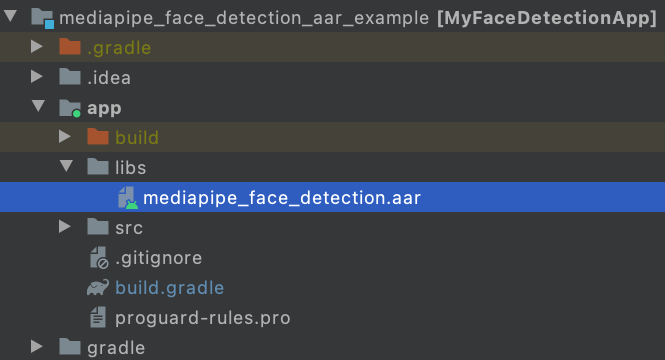
|
||||
|
||||
3. Make app/src/main/assets and copy assets (graph, model, and etc) into
|
||||
app/src/main/assets.
|
||||
@@ -89,32 +112,17 @@ each project.
|
||||
and copy
|
||||
[the binary graph](https://github.com/google/mediapipe/blob/master/mediapipe/examples/android/src/java/com/google/mediapipe/apps/facedetectiongpu/BUILD#L41)
|
||||
and
|
||||
[the face detection tflite model](https://github.com/google/mediapipe/tree/master/mediapipe/modules/face_detection/face_detection_front.tflite).
|
||||
[the face detection tflite model](https://github.com/google/mediapipe/tree/master/mediapipe/modules/face_detection/face_detection_short_range.tflite).
|
||||
|
||||
```bash
|
||||
bazel build -c opt mediapipe/mediapipe/graphs/face_detection:mobile_gpu_binary_graph
|
||||
cp bazel-bin/mediapipe/graphs/face_detection/mobile_gpu.binarypb /path/to/your/app/src/main/assets/
|
||||
cp mediapipe/modules/face_detection/face_detection_front.tflite /path/to/your/app/src/main/assets/
|
||||
bazel build -c opt mediapipe/graphs/face_detection:face_detection_mobile_gpu_binary_graph
|
||||
cp bazel-bin/mediapipe/graphs/face_detection/face_detection_mobile_gpu.binarypb /path/to/your/app/src/main/assets/
|
||||
cp mediapipe/modules/face_detection/face_detection_short_range.tflite /path/to/your/app/src/main/assets/
|
||||
```
|
||||
|
||||

|
||||
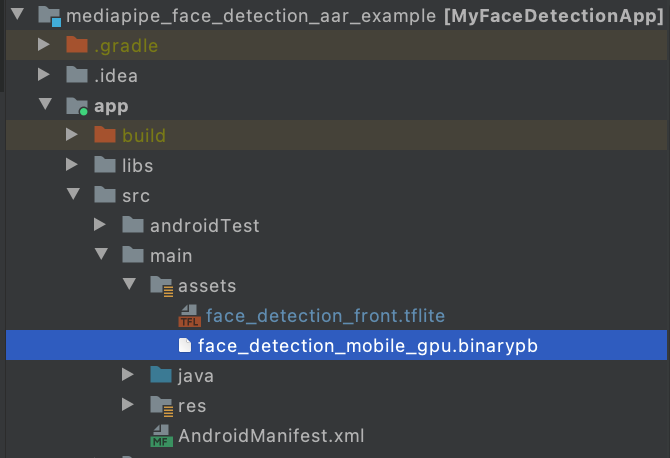
|
||||
|
||||
4. Make app/src/main/jniLibs and copy OpenCV JNI libraries into
|
||||
app/src/main/jniLibs.
|
||||
|
||||
MediaPipe depends on OpenCV, you will need to copy the precompiled OpenCV so
|
||||
files into app/src/main/jniLibs. You can download the official OpenCV
|
||||
Android SDK from
|
||||
[here](https://github.com/opencv/opencv/releases/download/3.4.3/opencv-3.4.3-android-sdk.zip)
|
||||
and run:
|
||||
|
||||
```bash
|
||||
cp -R ~/Downloads/OpenCV-android-sdk/sdk/native/libs/arm* /path/to/your/app/src/main/jniLibs/
|
||||
```
|
||||
|
||||

|
||||
|
||||
5. Modify app/build.gradle to add MediaPipe dependencies and MediaPipe AAR.
|
||||
4. Modify app/build.gradle to add MediaPipe dependencies and MediaPipe AAR.
|
||||
|
||||
```
|
||||
dependencies {
|
||||
@@ -125,21 +133,24 @@ each project.
|
||||
androidTestImplementation 'androidx.test.ext:junit:1.1.0'
|
||||
androidTestImplementation 'androidx.test.espresso:espresso-core:3.1.1'
|
||||
// MediaPipe deps
|
||||
implementation 'com.google.flogger:flogger:0.3.1'
|
||||
implementation 'com.google.flogger:flogger-system-backend:0.3.1'
|
||||
implementation 'com.google.code.findbugs:jsr305:3.0.2'
|
||||
implementation 'com.google.flogger:flogger:latest.release'
|
||||
implementation 'com.google.flogger:flogger-system-backend:latest.release'
|
||||
implementation 'com.google.code.findbugs:jsr305:latest.release'
|
||||
implementation 'com.google.guava:guava:27.0.1-android'
|
||||
implementation 'com.google.guava:guava:27.0.1-android'
|
||||
implementation 'com.google.protobuf:protobuf-java:3.11.4'
|
||||
implementation 'com.google.protobuf:protobuf-javalite:3.19.1'
|
||||
// CameraX core library
|
||||
def camerax_version = "1.0.0-beta10"
|
||||
implementation "androidx.camera:camera-core:$camerax_version"
|
||||
implementation "androidx.camera:camera-camera2:$camerax_version"
|
||||
implementation "androidx.camera:camera-lifecycle:$camerax_version"
|
||||
// AutoValue
|
||||
def auto_value_version = "1.8.1"
|
||||
implementation "com.google.auto.value:auto-value-annotations:$auto_value_version"
|
||||
annotationProcessor "com.google.auto.value:auto-value:$auto_value_version"
|
||||
}
|
||||
```
|
||||
|
||||
6. Follow our Android app examples to use MediaPipe in Android Studio for your
|
||||
5. Follow our Android app examples to use MediaPipe in Android Studio for your
|
||||
use case. If you are looking for an example, a face detection example can be
|
||||
found
|
||||
[here](https://github.com/jiuqiant/mediapipe_face_detection_aar_example) and
|
||||
|
||||
@@ -0,0 +1,131 @@
|
||||
---
|
||||
layout: default
|
||||
title: MediaPipe Android Solutions
|
||||
parent: MediaPipe on Android
|
||||
grand_parent: Getting Started
|
||||
nav_order: 2
|
||||
---
|
||||
|
||||
# MediaPipe Android Solutions
|
||||
{: .no_toc }
|
||||
|
||||
1. TOC
|
||||
{:toc}
|
||||
---
|
||||
|
||||
MediaPipe Android Solution APIs (currently in alpha) are available in:
|
||||
|
||||
* [MediaPipe Face Detection](../solutions/face_detection#android-solution-api)
|
||||
* [MediaPipe Face Mesh](../solutions/face_mesh#android-solution-api)
|
||||
* [MediaPipe Hands](../solutions/hands#android-solution-api)
|
||||
|
||||
## Incorporation in Android Studio
|
||||
|
||||
Prebuilt packages of Android Solution APIs can be found in
|
||||
[Google's Maven Repository](https://maven.google.com/web/index.html?#com.google.mediapipe).
|
||||
To incorporate them into an Android Studio project, add the following into the
|
||||
project's Gradle dependencies:
|
||||
|
||||
```
|
||||
dependencies {
|
||||
// MediaPipe solution-core is the foundation of any MediaPipe Solutions.
|
||||
implementation 'com.google.mediapipe:solution-core:latest.release'
|
||||
// Optional: MediaPipe Face Detection Solution.
|
||||
implementation 'com.google.mediapipe:facedetection:latest.release'
|
||||
// Optional: MediaPipe Face Mesh Solution.
|
||||
implementation 'com.google.mediapipe:facemesh:latest.release'
|
||||
// Optional: MediaPipe Hands Solution.
|
||||
implementation 'com.google.mediapipe:hands:latest.release'
|
||||
}
|
||||
```
|
||||
|
||||
If you need further customization, instead of using the prebuilt maven packages
|
||||
consider building a MediaPipe Android Archive library locally from source by
|
||||
following these [instructions](./android_archive_library.md).
|
||||
|
||||
## Building solution example apps
|
||||
|
||||
Detailed usage examples of the Android Solution APIs can be found in the
|
||||
[source code](https://github.com/google/mediapipe/tree/master/mediapipe/examples/android/solutions)
|
||||
of the solution example apps.
|
||||
|
||||
To build these apps:
|
||||
|
||||
1. Open Android Studio Arctic Fox on Linux, macOS, or Windows.
|
||||
|
||||
2. Import mediapipe/examples/android/solutions directory into Android Studio.
|
||||
|
||||
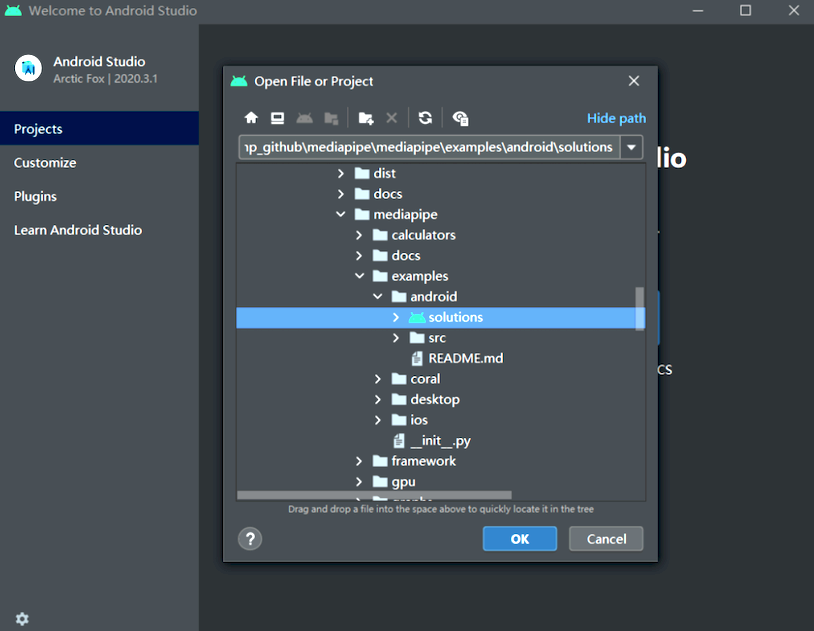
|
||||
|
||||
3. For Windows users, run `create_win_symlinks.bat` as administrator to create
|
||||
res directory symlinks.
|
||||
|
||||
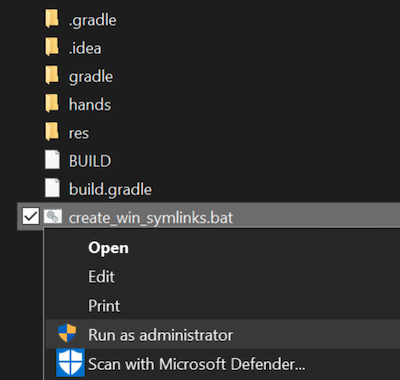
|
||||
|
||||
4. Select "File" -> "Sync Project with Gradle Files" to sync project.
|
||||
|
||||
5. Run solution example app in Android Studio.
|
||||
|
||||
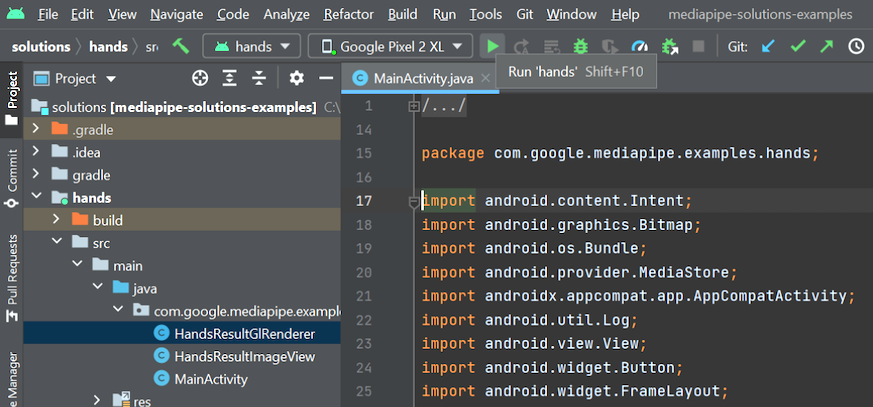
|
||||
|
||||
6. (Optional) Run solutions on CPU.
|
||||
|
||||
MediaPipe solution example apps run the pipeline and model inference on GPU
|
||||
by default. If needed, for example to run the apps on Android Emulator, set
|
||||
the `RUN_ON_GPU` boolean variable to `false` in the app's
|
||||
`MainActivity.java` to run the pipeline and model inference on CPU.
|
||||
|
||||
## MediaPipe Solution APIs Terms of Service
|
||||
|
||||
Last modified: November 12, 2021
|
||||
|
||||
Use of MediaPipe Solution APIs is subject to the
|
||||
[Google APIs Terms of Service](https://developers.google.com/terms),
|
||||
[Google API Services User Data Policy](https://developers.google.com/terms/api-services-user-data-policy),
|
||||
and the terms below. Please check back from time to time as these terms and
|
||||
policies are occasionally updated.
|
||||
|
||||
**Privacy**
|
||||
|
||||
When you use MediaPipe Solution APIs, processing of the input data (e.g. images,
|
||||
video, text) fully happens on-device, and **MediaPipe does not send that input
|
||||
data to Google servers**. As a result, you can use our APIs for processing data
|
||||
that should not leave the device.
|
||||
|
||||
MediaPipe Android Solution APIs will contact Google servers from time to time in
|
||||
order to receive things like bug fixes, updated models, and hardware accelerator
|
||||
compatibility information. MediaPipe Android Solution APIs also send metrics
|
||||
about the performance and utilization of the APIs in your app to Google. Google
|
||||
uses this metrics data to measure performance, API usage, debug, maintain and
|
||||
improve the APIs, and detect misuse or abuse, as further described in our
|
||||
[Privacy Policy](https://policies.google.com/privacy).
|
||||
|
||||
**You are responsible for obtaining informed consent from your app users about
|
||||
Google’s processing of MediaPipe metrics data as required by applicable law.**
|
||||
|
||||
Data we collect may include the following, across all MediaPipe Android Solution
|
||||
APIs:
|
||||
|
||||
- Device information (such as manufacturer, model, OS version and build) and
|
||||
available ML hardware accelerators (GPU and DSP). Used for diagnostics and
|
||||
usage analytics.
|
||||
|
||||
- App identification information (package name / bundle id, app version). Used
|
||||
for diagnostics and usage analytics.
|
||||
|
||||
- API configuration (such as image format, resolution, and MediaPipe version
|
||||
used). Used for diagnostics and usage analytics.
|
||||
|
||||
- Event type (such as initialize, download model, update, run, and detection).
|
||||
Used for diagnostics and usage analytics.
|
||||
|
||||
- Error codes. Used for diagnostics.
|
||||
|
||||
- Performance metrics. Used for diagnostics.
|
||||
|
||||
- Per-installation identifiers that do not uniquely identify a user or
|
||||
physical device. Used for operation of remote configuration and usage
|
||||
analytics.
|
||||
|
||||
- Network request sender IP addresses. Used for remote configuration
|
||||
diagnostics. Collected IP addresses are retained temporarily.
|
||||
@@ -103,7 +103,7 @@ monotonically increasing timestamps. By convention, realtime calculators and
|
||||
graphs use the recording time or the presentation time as the timestamp for each
|
||||
packet, with each timestamp representing microseconds since
|
||||
`Jan/1/1970:00:00:00`. This allows packets from various sources to be processed
|
||||
in a gloablly consistent order.
|
||||
in a globally consistent order.
|
||||
|
||||
Normally for offline processing, every input packet is processed and processing
|
||||
continues as long as necessary. For online processing, it is often necessary to
|
||||
|
||||
@@ -59,6 +59,21 @@ OpenGL ES profile shading language version string: OpenGL ES GLSL ES 3.20
|
||||
OpenGL ES profile extensions:
|
||||
```
|
||||
|
||||
If you have connected to your computer through SSH and find when you probe for
|
||||
GPU information you see the output:
|
||||
|
||||
```bash
|
||||
glxinfo | grep -i opengl
|
||||
Error: unable to open display
|
||||
```
|
||||
|
||||
Try re-establishing your SSH connection with the `-X` option and try again. For
|
||||
example:
|
||||
|
||||
```bash
|
||||
ssh -X <user>@<host>
|
||||
```
|
||||
|
||||
*Notice the ES 3.20 text above.*
|
||||
|
||||
You need to see ES 3.1 or greater printed in order to perform TFLite inference
|
||||
|
||||
@@ -27,12 +27,12 @@ graph on Android.
|
||||
A simple camera app for real-time Sobel edge detection applied to a live video
|
||||
stream on an Android device.
|
||||
|
||||

|
||||
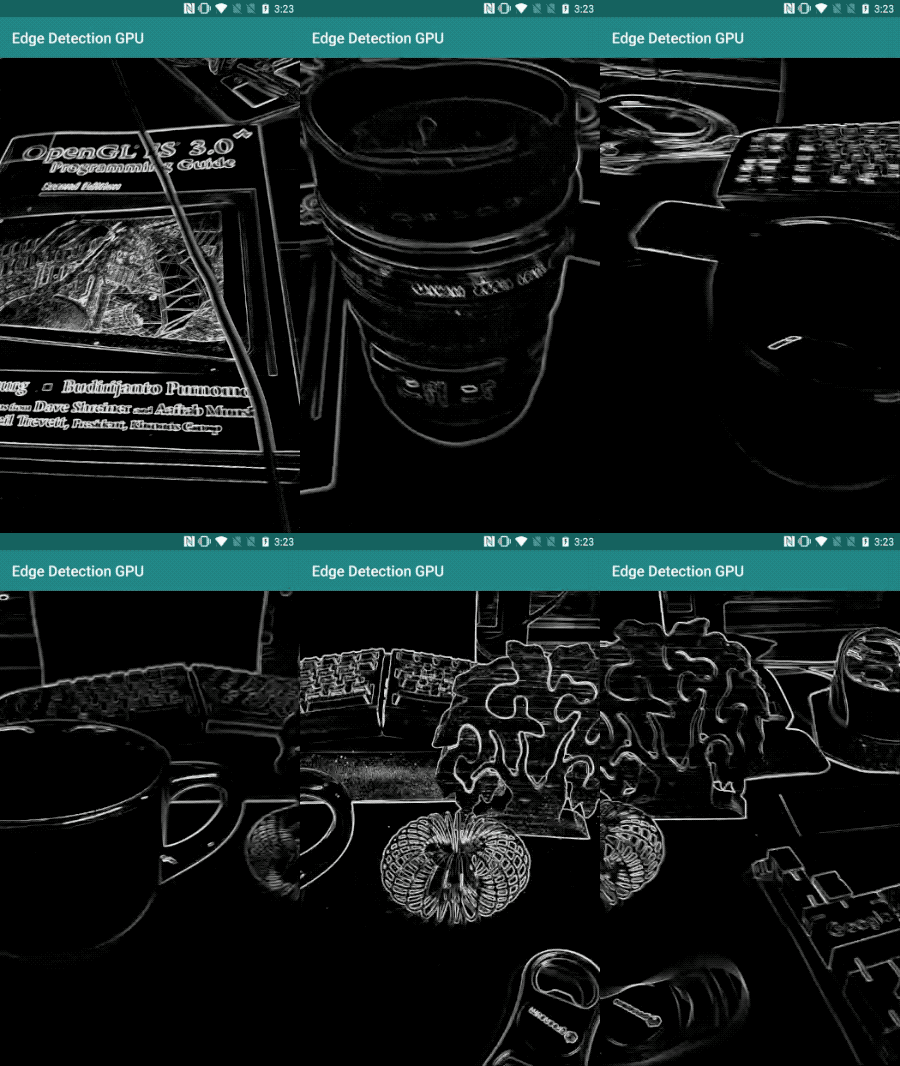
|
||||
|
||||
## Setup
|
||||
|
||||
1. Install MediaPipe on your system, see [MediaPipe installation guide] for
|
||||
details.
|
||||
1. Install MediaPipe on your system, see
|
||||
[MediaPipe installation guide](./install.md) for details.
|
||||
2. Install Android Development SDK and Android NDK. See how to do so also in
|
||||
[MediaPipe installation guide].
|
||||
3. Enable [developer options] on your Android device.
|
||||
@@ -69,7 +69,7 @@ node: {
|
||||
|
||||
A visualization of the graph is shown below:
|
||||
|
||||

|
||||
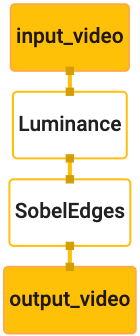
|
||||
|
||||
This graph has a single input stream named `input_video` for all incoming frames
|
||||
that will be provided by your device's camera.
|
||||
@@ -260,7 +260,7 @@ adb install bazel-bin/$APPLICATION_PATH/helloworld.apk
|
||||
Open the application on your device. It should display a screen with the text
|
||||
`Hello World!`.
|
||||
|
||||

|
||||
|
||||
|
||||
## Using the camera via `CameraX`
|
||||
|
||||
@@ -377,7 +377,7 @@ Add the following line in the `$APPLICATION_PATH/res/values/strings.xml` file:
|
||||
When the user doesn't grant camera permission, the screen will now look like
|
||||
this:
|
||||
|
||||

|
||||
|
||||
|
||||
Now, we will add the [`SurfaceTexture`] and [`SurfaceView`] objects to
|
||||
`MainActivity`:
|
||||
@@ -753,7 +753,7 @@ And that's it! You should now be able to successfully build and run the
|
||||
application on the device and see Sobel edge detection running on a live camera
|
||||
feed! Congrats!
|
||||
|
||||

|
||||

|
||||
|
||||
If you ran into any issues, please see the full code of the tutorial
|
||||
[here](https://github.com/google/mediapipe/tree/master/mediapipe/examples/android/src/java/com/google/mediapipe/apps/basic).
|
||||
@@ -770,7 +770,6 @@ If you ran into any issues, please see the full code of the tutorial
|
||||
[`ExternalTextureConverter`]:https://github.com/google/mediapipe/tree/master/mediapipe/java/com/google/mediapipe/components/ExternalTextureConverter.java
|
||||
[`FrameLayout`]:https://developer.android.com/reference/android/widget/FrameLayout
|
||||
[`FrameProcessor`]:https://github.com/google/mediapipe/tree/master/mediapipe/java/com/google/mediapipe/components/FrameProcessor.java
|
||||
[MediaPipe installation guide]:./install.md
|
||||
[`PermissionHelper`]: https://github.com/google/mediapipe/tree/master/mediapipe/java/com/google/mediapipe/components/PermissionHelper.java
|
||||
[`SurfaceHolder.Callback`]:https://developer.android.com/reference/android/view/SurfaceHolder.Callback.html
|
||||
[`SurfaceView`]:https://developer.android.com/reference/android/view/SurfaceView
|
||||
|
||||
@@ -85,7 +85,7 @@ nav_order: 1
|
||||
This graph consists of 1 graph input stream (`in`) and 1 graph output stream
|
||||
(`out`), and 2 [`PassThroughCalculator`]s connected serially.
|
||||
|
||||

|
||||
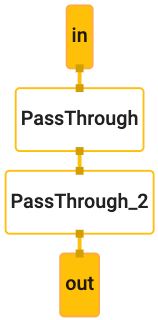
|
||||
|
||||
4. Before running the graph, an `OutputStreamPoller` object is connected to the
|
||||
output stream in order to later retrieve the graph output, and a graph run
|
||||
|
||||
@@ -27,12 +27,12 @@ on iOS.
|
||||
A simple camera app for real-time Sobel edge detection applied to a live video
|
||||
stream on an iOS device.
|
||||
|
||||

|
||||
|
||||
|
||||
## Setup
|
||||
|
||||
1. Install MediaPipe on your system, see [MediaPipe installation guide] for
|
||||
details.
|
||||
1. Install MediaPipe on your system, see
|
||||
[MediaPipe installation guide](./install.md) for details.
|
||||
2. Setup your iOS device for development.
|
||||
3. Setup [Bazel] on your system to build and deploy the iOS app.
|
||||
|
||||
@@ -67,7 +67,7 @@ node: {
|
||||
|
||||
A visualization of the graph is shown below:
|
||||
|
||||

|
||||

|
||||
|
||||
This graph has a single input stream named `input_video` for all incoming frames
|
||||
that will be provided by your device's camera.
|
||||
@@ -113,6 +113,10 @@ bazel to build the iOS application. The content of the
|
||||
5. `Main.storyboard` and `Launch.storyboard`
|
||||
6. `Assets.xcassets` directory.
|
||||
|
||||
Note: In newer versions of Xcode, you may see additional files `SceneDelegate.h`
|
||||
and `SceneDelegate.m`. Make sure to copy them too and add them to the `BUILD`
|
||||
file mentioned below.
|
||||
|
||||
Copy these files to a directory named `HelloWorld` to a location that can access
|
||||
the MediaPipe source code. For example, the source code of the application that
|
||||
we will build in this tutorial is located in
|
||||
@@ -127,7 +131,7 @@ Create a `BUILD` file in the `$APPLICATION_PATH` and add the following build
|
||||
rules:
|
||||
|
||||
```
|
||||
MIN_IOS_VERSION = "10.0"
|
||||
MIN_IOS_VERSION = "11.0"
|
||||
|
||||
load(
|
||||
"@build_bazel_rules_apple//apple:ios.bzl",
|
||||
@@ -247,6 +251,12 @@ We need to get frames from the `_cameraSource` into our application
|
||||
`MPPInputSourceDelegate`. So our application `ViewController` can be a delegate
|
||||
of `_cameraSource`.
|
||||
|
||||
Update the interface definition of `ViewController` accordingly:
|
||||
|
||||
```
|
||||
@interface ViewController () <MPPInputSourceDelegate>
|
||||
```
|
||||
|
||||
To handle camera setup and process incoming frames, we should use a queue
|
||||
different from the main queue. Add the following to the implementation block of
|
||||
the `ViewController`:
|
||||
@@ -288,6 +298,12 @@ utility called `MPPLayerRenderer` to display images on the screen. This utility
|
||||
can be used to display `CVPixelBufferRef` objects, which is the type of the
|
||||
images provided by `MPPCameraInputSource` to its delegates.
|
||||
|
||||
In `ViewController.m`, add the following import line:
|
||||
|
||||
```
|
||||
#import "mediapipe/objc/MPPLayerRenderer.h"
|
||||
```
|
||||
|
||||
To display images of the screen, we need to add a new `UIView` object called
|
||||
`_liveView` to the `ViewController`.
|
||||
|
||||
@@ -411,6 +427,12 @@ Objective-C++.
|
||||
|
||||
### Use the graph in `ViewController`
|
||||
|
||||
In `ViewController.m`, add the following import line:
|
||||
|
||||
```
|
||||
#import "mediapipe/objc/MPPGraph.h"
|
||||
```
|
||||
|
||||
Declare a static constant with the name of the graph, the input stream and the
|
||||
output stream:
|
||||
|
||||
@@ -549,10 +571,16 @@ method to receive packets on this output stream and display them on the screen:
|
||||
}
|
||||
```
|
||||
|
||||
Update the interface definition of `ViewController` with `MPPGraphDelegate`:
|
||||
|
||||
```
|
||||
@interface ViewController () <MPPGraphDelegate, MPPInputSourceDelegate>
|
||||
```
|
||||
|
||||
And that is all! Build and run the app on your iOS device. You should see the
|
||||
results of running the edge detection graph on a live video feed. Congrats!
|
||||
|
||||

|
||||

|
||||
|
||||
Please note that the iOS examples now use a [common] template app. The code in
|
||||
this tutorial is used in the [common] template app. The [helloworld] app has the
|
||||
@@ -560,6 +588,5 @@ appropriate `BUILD` file dependencies for the edge detection graph.
|
||||
|
||||
[Bazel]:https://bazel.build/
|
||||
[`edge_detection_mobile_gpu.pbtxt`]:https://github.com/google/mediapipe/tree/master/mediapipe/graphs/edge_detection/edge_detection_mobile_gpu.pbtxt
|
||||
[MediaPipe installation guide]:./install.md
|
||||
[common]:(https://github.com/google/mediapipe/tree/master/mediapipe/examples/ios/common)
|
||||
[helloworld]:(https://github.com/google/mediapipe/tree/master/mediapipe/examples/ios/helloworld)
|
||||
[common]:https://github.com/google/mediapipe/tree/master/mediapipe/examples/ios/common
|
||||
[helloworld]:https://github.com/google/mediapipe/tree/master/mediapipe/examples/ios/helloworld
|
||||
|
||||
@@ -43,104 +43,189 @@ install --user six`.
|
||||
|
||||
3. Install OpenCV and FFmpeg.
|
||||
|
||||
Option 1. Use package manager tool to install the pre-compiled OpenCV
|
||||
libraries. FFmpeg will be installed via libopencv-video-dev.
|
||||
**Option 1**. Use package manager tool to install the pre-compiled OpenCV
|
||||
libraries. FFmpeg will be installed via `libopencv-video-dev`.
|
||||
|
||||
Note: Debian 9 and Ubuntu 16.04 provide OpenCV 2.4.9. You may want to take
|
||||
option 2 or 3 to install OpenCV 3 or above.
|
||||
OS | OpenCV
|
||||
-------------------- | ------
|
||||
Debian 9 (stretch) | 2.4
|
||||
Debian 10 (buster) | 3.2
|
||||
Debian 11 (bullseye) | 4.5
|
||||
Ubuntu 16.04 LTS | 2.4
|
||||
Ubuntu 18.04 LTS | 3.2
|
||||
Ubuntu 20.04 LTS | 4.2
|
||||
Ubuntu 20.04 LTS | 4.2
|
||||
Ubuntu 21.04 | 4.5
|
||||
|
||||
```bash
|
||||
$ sudo apt-get install libopencv-core-dev libopencv-highgui-dev \
|
||||
libopencv-calib3d-dev libopencv-features2d-dev \
|
||||
libopencv-imgproc-dev libopencv-video-dev
|
||||
$ sudo apt-get install -y \
|
||||
libopencv-core-dev \
|
||||
libopencv-highgui-dev \
|
||||
libopencv-calib3d-dev \
|
||||
libopencv-features2d-dev \
|
||||
libopencv-imgproc-dev \
|
||||
libopencv-video-dev
|
||||
```
|
||||
|
||||
Debian 9 and Ubuntu 18.04 install the packages in
|
||||
`/usr/lib/x86_64-linux-gnu`. MediaPipe's [`opencv_linux.BUILD`] and
|
||||
[`ffmpeg_linux.BUILD`] are configured for this library path. Ubuntu 20.04
|
||||
may install the OpenCV and FFmpeg packages in `/usr/local`, Please follow
|
||||
the option 3 below to modify the [`WORKSPACE`], [`opencv_linux.BUILD`] and
|
||||
[`ffmpeg_linux.BUILD`] files accordingly.
|
||||
|
||||
Moreover, for Nvidia Jetson and Raspberry Pi devices with ARM Ubuntu, the
|
||||
library path needs to be modified like the following:
|
||||
MediaPipe's [`opencv_linux.BUILD`] and [`WORKSPACE`] are already configured
|
||||
for OpenCV 2/3 and should work correctly on any architecture:
|
||||
|
||||
```bash
|
||||
sed -i "s/x86_64-linux-gnu/aarch64-linux-gnu/g" third_party/opencv_linux.BUILD
|
||||
# WORKSPACE
|
||||
new_local_repository(
|
||||
name = "linux_opencv",
|
||||
build_file = "@//third_party:opencv_linux.BUILD",
|
||||
path = "/usr",
|
||||
)
|
||||
|
||||
# opencv_linux.BUILD for OpenCV 2/3 installed from Debian package
|
||||
cc_library(
|
||||
name = "opencv",
|
||||
linkopts = [
|
||||
"-l:libopencv_core.so",
|
||||
"-l:libopencv_calib3d.so",
|
||||
"-l:libopencv_features2d.so",
|
||||
"-l:libopencv_highgui.so",
|
||||
"-l:libopencv_imgcodecs.so",
|
||||
"-l:libopencv_imgproc.so",
|
||||
"-l:libopencv_video.so",
|
||||
"-l:libopencv_videoio.so",
|
||||
],
|
||||
)
|
||||
```
|
||||
|
||||
Option 2. Run [`setup_opencv.sh`] to automatically build OpenCV from source
|
||||
and modify MediaPipe's OpenCV config.
|
||||
For OpenCV 4 you need to modify [`opencv_linux.BUILD`] taking into account
|
||||
current architecture:
|
||||
|
||||
Option 3. Follow OpenCV's
|
||||
```bash
|
||||
# WORKSPACE
|
||||
new_local_repository(
|
||||
name = "linux_opencv",
|
||||
build_file = "@//third_party:opencv_linux.BUILD",
|
||||
path = "/usr",
|
||||
)
|
||||
|
||||
# opencv_linux.BUILD for OpenCV 4 installed from Debian package
|
||||
cc_library(
|
||||
name = "opencv",
|
||||
hdrs = glob([
|
||||
# Uncomment according to your multiarch value (gcc -print-multiarch):
|
||||
# "include/aarch64-linux-gnu/opencv4/opencv2/cvconfig.h",
|
||||
# "include/arm-linux-gnueabihf/opencv4/opencv2/cvconfig.h",
|
||||
# "include/x86_64-linux-gnu/opencv4/opencv2/cvconfig.h",
|
||||
"include/opencv4/opencv2/**/*.h*",
|
||||
]),
|
||||
includes = [
|
||||
# Uncomment according to your multiarch value (gcc -print-multiarch):
|
||||
# "include/aarch64-linux-gnu/opencv4/",
|
||||
# "include/arm-linux-gnueabihf/opencv4/",
|
||||
# "include/x86_64-linux-gnu/opencv4/",
|
||||
"include/opencv4/",
|
||||
],
|
||||
linkopts = [
|
||||
"-l:libopencv_core.so",
|
||||
"-l:libopencv_calib3d.so",
|
||||
"-l:libopencv_features2d.so",
|
||||
"-l:libopencv_highgui.so",
|
||||
"-l:libopencv_imgcodecs.so",
|
||||
"-l:libopencv_imgproc.so",
|
||||
"-l:libopencv_video.so",
|
||||
"-l:libopencv_videoio.so",
|
||||
],
|
||||
)
|
||||
```
|
||||
|
||||
**Option 2**. Run [`setup_opencv.sh`] to automatically build OpenCV from
|
||||
source and modify MediaPipe's OpenCV config. This option will do all steps
|
||||
defined in Option 3 automatically.
|
||||
|
||||
**Option 3**. Follow OpenCV's
|
||||
[documentation](https://docs.opencv.org/3.4.6/d7/d9f/tutorial_linux_install.html)
|
||||
to manually build OpenCV from source code.
|
||||
|
||||
Note: You may need to modify [`WORKSPACE`], [`opencv_linux.BUILD`] and
|
||||
[`ffmpeg_linux.BUILD`] to point MediaPipe to your own OpenCV and FFmpeg
|
||||
libraries. For example if OpenCV and FFmpeg are both manually installed in
|
||||
"/usr/local/", you will need to update: (1) the "linux_opencv" and
|
||||
"linux_ffmpeg" new_local_repository rules in [`WORKSPACE`], (2) the "opencv"
|
||||
cc_library rule in [`opencv_linux.BUILD`], and (3) the "libffmpeg"
|
||||
cc_library rule in [`ffmpeg_linux.BUILD`]. These 3 changes are shown below:
|
||||
You may need to modify [`WORKSPACE`] and [`opencv_linux.BUILD`] to point
|
||||
MediaPipe to your own OpenCV libraries. Assume OpenCV would be installed to
|
||||
`/usr/local/` which is recommended by default.
|
||||
|
||||
OpenCV 2/3 setup:
|
||||
|
||||
```bash
|
||||
# WORKSPACE
|
||||
new_local_repository(
|
||||
name = "linux_opencv",
|
||||
build_file = "@//third_party:opencv_linux.BUILD",
|
||||
path = "/usr/local",
|
||||
name = "linux_opencv",
|
||||
build_file = "@//third_party:opencv_linux.BUILD",
|
||||
path = "/usr/local",
|
||||
)
|
||||
|
||||
# opencv_linux.BUILD for OpenCV 2/3 installed to /usr/local
|
||||
cc_library(
|
||||
name = "opencv",
|
||||
linkopts = [
|
||||
"-L/usr/local/lib",
|
||||
"-l:libopencv_core.so",
|
||||
"-l:libopencv_calib3d.so",
|
||||
"-l:libopencv_features2d.so",
|
||||
"-l:libopencv_highgui.so",
|
||||
"-l:libopencv_imgcodecs.so",
|
||||
"-l:libopencv_imgproc.so",
|
||||
"-l:libopencv_video.so",
|
||||
"-l:libopencv_videoio.so",
|
||||
],
|
||||
)
|
||||
```
|
||||
|
||||
OpenCV 4 setup:
|
||||
|
||||
```bash
|
||||
# WORKSPACE
|
||||
new_local_repository(
|
||||
name = "linux_ffmpeg",
|
||||
build_file = "@//third_party:ffmpeg_linux.BUILD",
|
||||
path = "/usr/local",
|
||||
name = "linux_opencv",
|
||||
build_file = "@//third_party:opencv_linux.BUILD",
|
||||
path = "/usr/local",
|
||||
)
|
||||
|
||||
# opencv_linux.BUILD for OpenCV 4 installed to /usr/local
|
||||
cc_library(
|
||||
name = "opencv",
|
||||
srcs = glob(
|
||||
[
|
||||
"lib/libopencv_core.so",
|
||||
"lib/libopencv_highgui.so",
|
||||
"lib/libopencv_imgcodecs.so",
|
||||
"lib/libopencv_imgproc.so",
|
||||
"lib/libopencv_video.so",
|
||||
"lib/libopencv_videoio.so",
|
||||
],
|
||||
),
|
||||
hdrs = glob([
|
||||
# For OpenCV 3.x
|
||||
"include/opencv2/**/*.h*",
|
||||
# For OpenCV 4.x
|
||||
# "include/opencv4/opencv2/**/*.h*",
|
||||
]),
|
||||
includes = [
|
||||
# For OpenCV 3.x
|
||||
"include/",
|
||||
# For OpenCV 4.x
|
||||
# "include/opencv4/",
|
||||
],
|
||||
linkstatic = 1,
|
||||
visibility = ["//visibility:public"],
|
||||
name = "opencv",
|
||||
hdrs = glob([
|
||||
"include/opencv4/opencv2/**/*.h*",
|
||||
]),
|
||||
includes = [
|
||||
"include/opencv4/",
|
||||
],
|
||||
linkopts = [
|
||||
"-L/usr/local/lib",
|
||||
"-l:libopencv_core.so",
|
||||
"-l:libopencv_calib3d.so",
|
||||
"-l:libopencv_features2d.so",
|
||||
"-l:libopencv_highgui.so",
|
||||
"-l:libopencv_imgcodecs.so",
|
||||
"-l:libopencv_imgproc.so",
|
||||
"-l:libopencv_video.so",
|
||||
"-l:libopencv_videoio.so",
|
||||
],
|
||||
)
|
||||
```
|
||||
|
||||
Current FFmpeg setup is defined in [`ffmpeg_linux.BUILD`] and should work
|
||||
for any architecture:
|
||||
|
||||
```bash
|
||||
# WORKSPACE
|
||||
new_local_repository(
|
||||
name = "linux_ffmpeg",
|
||||
build_file = "@//third_party:ffmpeg_linux.BUILD",
|
||||
path = "/usr"
|
||||
)
|
||||
|
||||
# ffmpeg_linux.BUILD for FFmpeg installed from Debian package
|
||||
cc_library(
|
||||
name = "libffmpeg",
|
||||
srcs = glob(
|
||||
[
|
||||
"lib/libav*.so",
|
||||
],
|
||||
),
|
||||
hdrs = glob(["include/libav*/*.h"]),
|
||||
includes = ["include"],
|
||||
linkopts = [
|
||||
"-lavcodec",
|
||||
"-lavformat",
|
||||
"-lavutil",
|
||||
],
|
||||
linkstatic = 1,
|
||||
visibility = ["//visibility:public"],
|
||||
name = "libffmpeg",
|
||||
linkopts = [
|
||||
"-l:libavcodec.so",
|
||||
"-l:libavformat.so",
|
||||
"-l:libavutil.so",
|
||||
],
|
||||
)
|
||||
```
|
||||
|
||||
@@ -471,7 +556,7 @@ next section.
|
||||
4. Install Visual C++ Build Tools 2019 and WinSDK
|
||||
|
||||
Go to
|
||||
[the VisualStudio website](ttps://visualstudio.microsoft.com/visual-cpp-build-tools),
|
||||
[the VisualStudio website](https://visualstudio.microsoft.com/visual-cpp-build-tools),
|
||||
download build tools, and install Microsoft Visual C++ 2019 Redistributable
|
||||
and Microsoft Build Tools 2019.
|
||||
|
||||
@@ -484,7 +569,7 @@ next section.
|
||||
|
||||
Option 1. Follow
|
||||
[the official Bazel documentation](https://docs.bazel.build/versions/master/install-windows.html)
|
||||
to install Bazel 3.7.2 or higher.
|
||||
to install Bazel 5.2.0 or higher.
|
||||
|
||||
Option 2. Follow the official
|
||||
[Bazel documentation](https://docs.bazel.build/versions/master/install-bazelisk.html)
|
||||
@@ -572,7 +657,7 @@ cameras. Alternatively, you use a video file as input.
|
||||
|
||||
Note: Windows' and WSL’s adb versions must be the same version, e.g., if WSL
|
||||
has ADB 1.0.39, you need to download the corresponding Windows ADB from
|
||||
[here](https://dl.google.com/android/repository/platform-tools_r26.0.1-windows.zip).
|
||||
[here](https://dl.google.com/android/repository/platform-tools_r30.0.3-windows.zip).
|
||||
|
||||
3. Launch WSL.
|
||||
|
||||
@@ -711,7 +796,7 @@ This will use a Docker image that will isolate mediapipe's installation from the
|
||||
```bash
|
||||
$ docker run -it --name mediapipe mediapipe:latest
|
||||
|
||||
root@bca08b91ff63:/mediapipe# GLOG_logtostderr=1 bazel run --define MEDIAPIPE_DISABLE_GPU=1 mediapipe/examples/desktop/hello_world:hello_world
|
||||
root@bca08b91ff63:/mediapipe# GLOG_logtostderr=1 bazel run --define MEDIAPIPE_DISABLE_GPU=1 mediapipe/examples/desktop/hello_world
|
||||
|
||||
# Should print:
|
||||
# Hello World!
|
||||
@@ -738,7 +823,7 @@ common build issues.
|
||||
root@bca08b91ff63:/mediapipe# bash ./setup_android_sdk_and_ndk.sh
|
||||
|
||||
# Should print:
|
||||
# Android NDK is now installed. Consider setting $ANDROID_NDK_HOME environment variable to be /root/Android/Sdk/ndk-bundle/android-ndk-r18b
|
||||
# Android NDK is now installed. Consider setting $ANDROID_NDK_HOME environment variable to be /root/Android/Sdk/ndk-bundle/android-ndk-r19c
|
||||
# Set android_ndk_repository and android_sdk_repository in WORKSPACE
|
||||
# Done
|
||||
|
||||
|
||||
@@ -32,9 +32,14 @@ example apps, start from, start from
|
||||
xcode-select --install
|
||||
```
|
||||
|
||||
3. Install [Bazel](https://bazel.build/).
|
||||
3. Install [Bazelisk](https://github.com/bazelbuild/bazelisk)
|
||||
.
|
||||
|
||||
We recommend using [Homebrew](https://brew.sh/) to get the latest version.
|
||||
We recommend using [Homebrew](https://brew.sh/) to get the latest versions.
|
||||
|
||||
```bash
|
||||
brew install bazelisk
|
||||
```
|
||||
|
||||
4. Set Python 3.7 as the default Python version and install the Python "six"
|
||||
library. This is needed for TensorFlow.
|
||||
@@ -187,6 +192,9 @@ Note: When you ask Xcode to run an app, by default it will use the Debug
|
||||
configuration. Some of our demos are computationally heavy; you may want to use
|
||||
the Release configuration for better performance.
|
||||
|
||||
Note: Due to an imcoptibility caused by one of our dependencies, MediaPipe
|
||||
cannot be used for apps running on the iPhone Simulator on Apple Silicon (M1).
|
||||
|
||||
Tip: To switch build configuration in Xcode, click on the target menu, choose
|
||||
"Edit Scheme...", select the Run action, and switch the Build Configuration from
|
||||
Debug to Release. Note that this is set independently for each target.
|
||||
|
||||
@@ -16,17 +16,29 @@ nav_order: 4
|
||||
|
||||
MediaPipe currently offers the following solutions:
|
||||
|
||||
Solution | NPM Package | Example
|
||||
----------------- | ----------------------------- | -------
|
||||
[Face Mesh][F-pg] | [@mediapipe/face_mesh][F-npm] | [mediapipe.dev/demo/face_mesh][F-demo]
|
||||
[Face Detection][Fd-pg] | [@mediapipe/face_detection][Fd-npm] | [mediapipe.dev/demo/face_detection][Fd-demo]
|
||||
[Hands][H-pg] | [@mediapipe/hands][H-npm] | [mediapipe.dev/demo/hands][H-demo]
|
||||
[Holistic][Ho-pg] | [@mediapipe/holistic][Ho-npm] | [mediapipe.dev/demo/holistic][Ho-demo]
|
||||
[Pose][P-pg] | [@mediapipe/pose][P-npm] | [mediapipe.dev/demo/pose][P-demo]
|
||||
Solution | NPM Package | Example
|
||||
--------------------------- | --------------------------------------- | -------
|
||||
[Face Mesh][F-pg] | [@mediapipe/face_mesh][F-npm] | [mediapipe.dev/demo/face_mesh][F-demo]
|
||||
[Face Detection][Fd-pg] | [@mediapipe/face_detection][Fd-npm] | [mediapipe.dev/demo/face_detection][Fd-demo]
|
||||
[Hands][H-pg] | [@mediapipe/hands][H-npm] | [mediapipe.dev/demo/hands][H-demo]
|
||||
[Holistic][Ho-pg] | [@mediapipe/holistic][Ho-npm] | [mediapipe.dev/demo/holistic][Ho-demo]
|
||||
[Objectron][Ob-pg] | [@mediapipe/objectron][Ob-npm] | [mediapipe.dev/demo/objectron][Ob-demo]
|
||||
[Pose][P-pg] | [@mediapipe/pose][P-npm] | [mediapipe.dev/demo/pose][P-demo]
|
||||
[Selfie Segmentation][S-pg] | [@mediapipe/selfie_segmentation][S-npm] | [mediapipe.dev/demo/selfie_segmentation][S-demo]
|
||||
|
||||
Click on a solution link above for more information, including API and code
|
||||
snippets.
|
||||
|
||||
### Supported plaforms:
|
||||
|
||||
| Browser | Platform | Notes |
|
||||
| ------- | ----------------------- | -------------------------------------- |
|
||||
| Chrome | Android / Windows / Mac | Pixel 4 and older unsupported. Fuschia |
|
||||
| | | unsupported. |
|
||||
| Chrome | iOS | Camera unavailable in Chrome on iOS. |
|
||||
| Safari | iPad/iPhone/Mac | iOS and Safari on iPad / iPhone / |
|
||||
| | | MacBook |
|
||||
|
||||
The quickest way to get acclimated is to look at the examples above. Each demo
|
||||
has a link to a [CodePen][codepen] so that you can edit the code and try it
|
||||
yourself. We have included a number of utility packages to help you get started:
|
||||
@@ -66,29 +78,25 @@ affecting your work, restrict your request to a `<minor>` number. e.g.,
|
||||
[F-pg]: ../solutions/face_mesh#javascript-solution-api
|
||||
[Fd-pg]: ../solutions/face_detection#javascript-solution-api
|
||||
[H-pg]: ../solutions/hands#javascript-solution-api
|
||||
[Ob-pg]: ../solutions/objectron#javascript-solution-api
|
||||
[P-pg]: ../solutions/pose#javascript-solution-api
|
||||
[S-pg]: ../solutions/selfie_segmentation#javascript-solution-api
|
||||
[Ho-npm]: https://www.npmjs.com/package/@mediapipe/holistic
|
||||
[F-npm]: https://www.npmjs.com/package/@mediapipe/face_mesh
|
||||
[Fd-npm]: https://www.npmjs.com/package/@mediapipe/face_detection
|
||||
[H-npm]: https://www.npmjs.com/package/@mediapipe/hands
|
||||
[Ob-npm]: https://www.npmjs.com/package/@mediapipe/objectron
|
||||
[P-npm]: https://www.npmjs.com/package/@mediapipe/pose
|
||||
[S-npm]: https://www.npmjs.com/package/@mediapipe/selfie_segmentation
|
||||
[draw-npm]: https://www.npmjs.com/package/@mediapipe/drawing_utils
|
||||
[cam-npm]: https://www.npmjs.com/package/@mediapipe/camera_utils
|
||||
[ctrl-npm]: https://www.npmjs.com/package/@mediapipe/control_utils
|
||||
[Ho-jsd]: https://www.jsdelivr.com/package/npm/@mediapipe/holistic
|
||||
[F-jsd]: https://www.jsdelivr.com/package/npm/@mediapipe/face_mesh
|
||||
[Fd-jsd]: https://www.jsdelivr.com/package/npm/@mediapipe/face_detection
|
||||
[H-jsd]: https://www.jsdelivr.com/package/npm/@mediapipe/hands
|
||||
[P-jsd]: https://www.jsdelivr.com/package/npm/@mediapipe/pose
|
||||
[Ho-pen]: https://code.mediapipe.dev/codepen/holistic
|
||||
[F-pen]: https://code.mediapipe.dev/codepen/face_mesh
|
||||
[Fd-pen]: https://code.mediapipe.dev/codepen/face_detection
|
||||
[H-pen]: https://code.mediapipe.dev/codepen/hands
|
||||
[P-pen]: https://code.mediapipe.dev/codepen/pose
|
||||
[Ho-demo]: https://mediapipe.dev/demo/holistic
|
||||
[F-demo]: https://mediapipe.dev/demo/face_mesh
|
||||
[Fd-demo]: https://mediapipe.dev/demo/face_detection
|
||||
[H-demo]: https://mediapipe.dev/demo/hands
|
||||
[Ob-demo]: https://mediapipe.dev/demo/objectron
|
||||
[P-demo]: https://mediapipe.dev/demo/pose
|
||||
[S-demo]: https://mediapipe.dev/demo/selfie_segmentation
|
||||
[npm]: https://www.npmjs.com/package/@mediapipe
|
||||
[codepen]: https://code.mediapipe.dev/codepen
|
||||
|
||||
@@ -26,7 +26,7 @@ You can, for instance, activate a Python virtual environment:
|
||||
$ python3 -m venv mp_env && source mp_env/bin/activate
|
||||
```
|
||||
|
||||
Install MediaPipe Python package and start Python intepreter:
|
||||
Install MediaPipe Python package and start Python interpreter:
|
||||
|
||||
```bash
|
||||
(mp_env)$ pip install mediapipe
|
||||
@@ -51,6 +51,7 @@ details in each solution via the links below:
|
||||
* [MediaPipe Holistic](../solutions/holistic#python-solution-api)
|
||||
* [MediaPipe Objectron](../solutions/objectron#python-solution-api)
|
||||
* [MediaPipe Pose](../solutions/pose#python-solution-api)
|
||||
* [MediaPipe Selfie Segmentation](../solutions/selfie_segmentation#python-solution-api)
|
||||
|
||||
## MediaPipe on Google Colab
|
||||
|
||||
@@ -62,6 +63,7 @@ details in each solution via the links below:
|
||||
* [MediaPipe Pose Colab](https://mediapipe.page.link/pose_py_colab)
|
||||
* [MediaPipe Pose Classification Colab (Basic)](https://mediapipe.page.link/pose_classification_basic)
|
||||
* [MediaPipe Pose Classification Colab (Extended)](https://mediapipe.page.link/pose_classification_extended)
|
||||
* [MediaPipe Selfie Segmentation Colab](https://mediapipe.page.link/selfie_segmentation_py_colab)
|
||||
|
||||
## MediaPipe Python Framework
|
||||
|
||||
@@ -111,9 +113,8 @@ Nvidia Jetson and Raspberry Pi, please read
|
||||
|
||||
Download the latest protoc win64 zip from
|
||||
[the Protobuf GitHub repo](https://github.com/protocolbuffers/protobuf/releases),
|
||||
unzip the file, and copy the protoc.exe executable to a preferred
|
||||
location. Please ensure that location is added into the Path environment
|
||||
variable.
|
||||
unzip the file, and copy the protoc.exe executable to a preferred location.
|
||||
Please ensure that location is added into the Path environment variable.
|
||||
|
||||
3. Activate a Python virtual environment.
|
||||
|
||||
@@ -129,16 +130,14 @@ Nvidia Jetson and Raspberry Pi, please read
|
||||
(mp_env)mediapipe$ pip3 install -r requirements.txt
|
||||
```
|
||||
|
||||
6. Generate and install MediaPipe package.
|
||||
6. Build and install MediaPipe package.
|
||||
|
||||
```bash
|
||||
(mp_env)mediapipe$ python3 setup.py gen_protos
|
||||
(mp_env)mediapipe$ python3 setup.py install --link-opencv
|
||||
```
|
||||
|
||||
or
|
||||
|
||||
```bash
|
||||
(mp_env)mediapipe$ python3 setup.py gen_protos
|
||||
(mp_env)mediapipe$ python3 setup.py bdist_wheel
|
||||
```
|
||||
|
||||
@@ -74,7 +74,7 @@ Mapping\[str, Packet\] | std::map<std::string, Packet> | create_st
|
||||
np.ndarray<br>(cv.mat and PIL.Image) | mp::ImageFrame | create_image_frame(<br> format=ImageFormat.SRGB,<br> data=mat) | get_image_frame(packet)
|
||||
np.ndarray | mp::Matrix | create_matrix(data) | get_matrix(packet)
|
||||
Google Proto Message | Google Proto Message | create_proto(proto) | get_proto(packet)
|
||||
List\[Proto\] | std::vector\<Proto\> | create_proto_vector(proto_list) | get_proto_list(packet)
|
||||
List\[Proto\] | std::vector\<Proto\> | n/a | get_proto_list(packet)
|
||||
|
||||
It's not uncommon that users create custom C++ classes and and send those into
|
||||
the graphs and calculators. To allow the custom classes to be used in Python
|
||||
@@ -126,6 +126,7 @@ following steps:
|
||||
}
|
||||
return packet.Get<MyType>();
|
||||
});
|
||||
}
|
||||
} // namespace mediapipe
|
||||
```
|
||||
|
||||
@@ -249,12 +250,12 @@ three stages: initialization and setup, graph run, and graph shutdown.
|
||||
graph.start_run()
|
||||
|
||||
graph.add_packet_to_input_stream(
|
||||
'in_stream', mp.packet_creator.create_str('abc').at(0))
|
||||
'in_stream', mp.packet_creator.create_string('abc').at(0))
|
||||
|
||||
rgb_img = cv2.cvtColor(cv2.imread('/path/to/your/image.png'), cv2.COLOR_BGR2RGB)
|
||||
graph.add_packet_to_input_stream(
|
||||
'in_stream',
|
||||
mp.packet_creator.create_image_frame(format=mp.ImageFormat.SRGB,
|
||||
mp.packet_creator.create_image_frame(image_format=mp.ImageFormat.SRGB,
|
||||
data=rgb_img).at(1))
|
||||
```
|
||||
|
||||
|
||||
@@ -97,6 +97,49 @@ linux_opencv/macos_opencv/windows_opencv.BUILD files for your local opencv
|
||||
libraries. [This GitHub issue](https://github.com/google/mediapipe/issues/666)
|
||||
may also help.
|
||||
|
||||
## Python pip install failure
|
||||
|
||||
The error message:
|
||||
|
||||
```
|
||||
ERROR: Could not find a version that satisfies the requirement mediapipe
|
||||
ERROR: No matching distribution found for mediapipe
|
||||
```
|
||||
|
||||
after running `pip install mediapipe` usually indicates that there is no qualified MediaPipe Python for your system.
|
||||
Please note that MediaPipe Python PyPI officially supports the **64-bit**
|
||||
version of Python 3.7 to 3.10 on the following OS:
|
||||
|
||||
- x86_64 Linux
|
||||
- x86_64 macOS 10.15+
|
||||
- amd64 Windows
|
||||
|
||||
If the OS is currently supported and you still see this error, please make sure
|
||||
that both the Python and pip binary are for Python 3.7 to 3.10. Otherwise,
|
||||
please consider building the MediaPipe Python package locally by following the
|
||||
instructions [here](python.md#building-mediapipe-python-package).
|
||||
|
||||
## Python DLL load failure on Windows
|
||||
|
||||
The error message:
|
||||
|
||||
```
|
||||
ImportError: DLL load failed: The specified module could not be found
|
||||
```
|
||||
|
||||
usually indicates that the local Windows system is missing Visual C++
|
||||
redistributable packages and/or Visual C++ runtime DLLs. This can be solved by
|
||||
either installing the official
|
||||
[vc_redist.x64.exe](https://support.microsoft.com/en-us/topic/the-latest-supported-visual-c-downloads-2647da03-1eea-4433-9aff-95f26a218cc0)
|
||||
or installing the "msvc-runtime" Python package by running
|
||||
|
||||
```bash
|
||||
$ python -m pip install msvc-runtime
|
||||
```
|
||||
|
||||
Please note that the "msvc-runtime" Python package is not released or maintained
|
||||
by Microsoft.
|
||||
|
||||
## Native method not found
|
||||
|
||||
The error message:
|
||||
|
||||

|
Before Width: | Height: | Size: 18 KiB |

|
Before Width: | Height: | Size: 15 KiB |

|
Before Width: | Height: | Size: 51 KiB |

|
Before Width: | Height: | Size: 885 KiB |

|
Before Width: | Height: | Size: 66 KiB |

|
Before Width: | Height: | Size: 8.2 MiB |

|
Before Width: | Height: | Size: 170 KiB |

|
Before Width: | Height: | Size: 5.5 MiB |

|
Before Width: | Height: | Size: 39 KiB |

|
Before Width: | Height: | Size: 7.7 KiB |

|
Before Width: | Height: | Size: 11 KiB |

|
Before Width: | Height: | Size: 361 KiB |

|
Before Width: | Height: | Size: 15 KiB |

|
Before Width: | Height: | Size: 5.8 KiB |

|
Before Width: | Height: | Size: 11 KiB |

|
Before Width: | Height: | Size: 27 KiB |

|
Before Width: | Height: | Size: 195 KiB |

|
Before Width: | Height: | Size: 35 KiB |

|
Before Width: | Height: | Size: 118 KiB |

|
Before Width: | Height: | Size: 524 KiB |

|
Before Width: | Height: | Size: 808 KiB |

|
Before Width: | Height: | Size: 6.7 MiB |
|
Before Width: | Height: | Size: 1.1 KiB |
|
Before Width: | Height: | Size: 923 B |

|
Before Width: | Height: | Size: 46 KiB |

|
Before Width: | Height: | Size: 217 KiB |

|
Before Width: | Height: | Size: 163 KiB |

|
Before Width: | Height: | Size: 9.6 KiB |

|
Before Width: | Height: | Size: 4.6 KiB |

|
Before Width: | Height: | Size: 1.3 MiB |

|
Before Width: | Height: | Size: 1.8 KiB |

|
Before Width: | Height: | Size: 26 KiB |

|
Before Width: | Height: | Size: 31 KiB |

|
Before Width: | Height: | Size: 20 KiB |

|
Before Width: | Height: | Size: 4.6 KiB |

|
Before Width: | Height: | Size: 302 KiB |

|
Before Width: | Height: | Size: 9.4 KiB |

|
Before Width: | Height: | Size: 35 KiB |

|
Before Width: | Height: | Size: 75 KiB |

|
Before Width: | Height: | Size: 29 KiB |

|
Before Width: | Height: | Size: 18 KiB |

|
Before Width: | Height: | Size: 37 KiB |

|
Before Width: | Height: | Size: 666 KiB |

|
Before Width: | Height: | Size: 529 KiB |

|
Before Width: | Height: | Size: 12 KiB |

|
Before Width: | Height: | Size: 2.3 MiB |

|
Before Width: | Height: | Size: 808 KiB |

|
Before Width: | Height: | Size: 121 KiB |

|
Before Width: | Height: | Size: 72 KiB |

|
Before Width: | Height: | Size: 121 KiB |

|
Before Width: | Height: | Size: 3.3 MiB |

|
Before Width: | Height: | Size: 1.0 MiB |

|
Before Width: | Height: | Size: 32 KiB |

|
Before Width: | Height: | Size: 59 KiB |

|
Before Width: | Height: | Size: 1.3 MiB |

|
Before Width: | Height: | Size: 460 KiB |

|
Before Width: | Height: | Size: 64 KiB |

|
Before Width: | Height: | Size: 299 KiB |

|
Before Width: | Height: | Size: 3.1 MiB |

|
Before Width: | Height: | Size: 383 KiB |

|
Before Width: | Height: | Size: 84 KiB |